Friday, February 27, 2015

Baby Books I read (and didn't read)

Hapy #FridayReads Everyone! (Yes I know hashtags don't work like that. Humor me.) Here's a blog post I've been kicking around for a while about what books I've read (and not read) as a brand new parent. My baby is almost 8 months old now, so clearly I'm an expert. (Again, sarcasm.) But I am a librarian and a mom, so here it goes.

The TL;DR version of this: read Bedtiming and Headed Home with your Newborn if you only have time for two books and you are not a crazy crazy research obsessed librarian.

Books About Pregnancy
What to Expect When You're Expecting - I actually BOUGHT this book. I don't buy that many books; I check them out from the library. I bought it and barely looked at it. But it seemed like the thing to do, this was the classic one, so I got it. I also got it as an app on my phone. That I read every week. And shared with my husband. The app has kept going with updates about development. I still like it. Mostly used the book as a photo prop for announcement photo.

Pregnancy and Birth: Your Questions Answered - I skimmed and read bits and pieces of this one. It was okay.

Mostly I did most of my pregnancy reading online as symptoms came up. I understood pregnancy more or less. Plus I kept it a secret at work for the first trimester so I didn't want to check out too many books.

Books About Babies
The Sh*t No One Tells You: A Guide To Your Baby's First Year - I loved this one. A really good mix
of helpful advice and funny stories. Best pieces of advice I picked up: make other parent friends. (Might I suggest your local library's baby time as a great place for that?) Also each partner should get to keep one activity that is just for them (that isn't work) outside the house. And they should work together to make those happen for them both. My husband gets soccer and his MBA classes. I get to be on the board of a non-profit and have a knitting group.

Your Baby's First Year: Third Edition (American Association of Pediatrics) - I bought this one on the recommendation of my doctor. It is what he uses with his kids. What's great about it is that if there isn't the research to back something up, they just tell you the research is fuzzy in this area. This is unlike the internet which is full of blogs claiming to be experts. They also have a great website healthychildren.org

Be Prepared: A Practical Handbook for New Dads -
This one we borrowed from a friend for my husband. She had bought it almost as a joke for him, but it was really helpful. I recommend it totally. (Also used as a photo prop for an announcement photo.)

The Baby Owner's Manual: Operating Instructions, Trouble-Shooting Tips & Advice on First Year Maintenance - Again I purchased this for my husband for Christmas. Surprisingly helpful. Fairly humorous. Really is owner's manual style.

Heading Home with Your Newborn: From Birth to Reality - I also really liked this one. Practical and
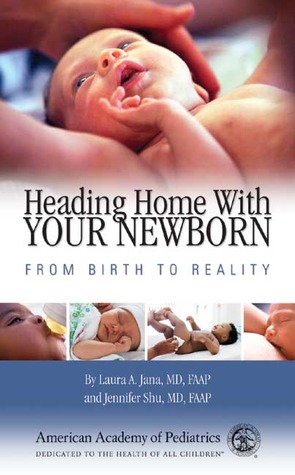
well done. One of the few books I read cover to cover instead of just skimming. Written by moms who are also pediatricians, it is good advice (research backed) with some humor and real life stories tossed in.

HappyBaby: The Organic Guide to Baby's First Months - I skimmed this one. And I didn't realize it until I just looked it up for this post that it was co-written by a "team" at a baby food company. Oh well. I really like that baby food company. There have been a couple brands of foods we have purchased for Annabelle, mostly I make her food, but HappyBaby is one. Also this is by Dr. Sears and I'm not totally on board as an attachment parent, but I'm pretty crunchy (though I vaccinate). So I read his stuff with a grain of salt.

Baby Led Weaning - I'll probably do a feeding baby post on my personal blog. This book was great. We are mostly doing baby led weaning and it is awesome. I also did a lot of research online for this. Again I rather skimmed this book, but I got the general idea.

Start Fresh: Your Child's Jump Start to Lifelong Healthy Eating - This book was a gift from a friend.
It's a cookbook for babies, starting with purees. Since we started with purees because she was hungry for food before she was ready to eat solids, this was really helpful. However I would like to contend that "steam sweet potatoes, puree" does not really constitute a recipe and shouldn't take half a page in the middle of a bunch of identical other one-ingredient purees. That said, the multiple ingredient purees and the recipes for solids are great. And I liked the intro, narrative, and general approach of this cookbook.

Baby-Gami: Baby Wrapping for Beginners - Another gift from a
friend. Really pretty pictures of swaddled babies and step by step instructions for swaddling babies. I was hugely pregnant so I mostly skimmed it and admired the pretty happy babies. I recommend borrowing a friends baby to practice swaddling. Please note that when you begin, your baby will probably not be as happy as the ones in the book. Husband and I practiced on a teddy bear (also how we practiced using the baby carrier) but it wasn't the same. We needed 2am refresher courses from the hospital nurses. He was much better at it than I was. I pretty much relied on the velcro swaddling blankets. Our daughter escaping from one of my swaddles is pictured on the book.

Our Babies, Ourselves - Another recommendation from a friend (who also recommended Bedtiming). This is really good look at different philosophies across different cultures about how we raise babies. It doesn't have as much practical advice, but if you're a nerd and you like big picture/psychological/anthropological/sociology stuff, you will like it.

I also did a lot of reading online. So much online reading and I took everything with a grain of salt. It is either the best or worst thing to be able to google stuff at 2am.

Books About Sleep
When I went back to work, sleep became a big issue. That also deserves its own post. Short version: she had been sleeping and then wasn't and I didn't know how to fix it. Everyday at lunch I would go to the parenting section of the library, choose a different sleep book, go to my office, hook up my breast pump, read the sleep book, try not to cry in exhaustion. I got REAL SERIOUS about sleep books. I took notes. I used post it flags to mark sections for my husband to read. I read over half that section and won't talk about all of it. (A personal blog entry at some point, maybe.)

Bedtiming: The Parent's Guide to Getting Your Child To Sleep At Just The Right Age - There is one
book that I recommend time and time again. I've recommended it to a couple of friends expecting a baby, I've lent out my copy (because I purchased my own). My copy was covered in notes and stickies. And when parents ask at the library for books on sleep training, I give them this one. It focuses mostly on WHEN not how to sleep train your baby. Some ages work better than others based on developmental things happening with your baby. And at the end it also overviews the different sleep training techniques. This book is solid gold. Read it.

Monday, January 05, 2015

Reading Goal 2015 - My Dirty Dozen

In early 2004 I started a spreadsheet to track what I was reading for a librarians read challenge. I kept going past the end of the challenge and past the end of the year. I kept that spreadsheet going until 2014 when pregnancy brain and baby brain caused it to fall apart.

I've had middling success with goodreads. I go on a tear for a few months and then abandon it again for the next 6 months. I'm going back to my spreadsheet again. If you ignore the last year, it worked for me for a decade and I know I can commit to it.

However I want to try a new reading challenge. There are lots of them floating around. Cannonball read (a book a week, 52 books), or two a month (24 total), or this one by category/feature is really cool. (ie a book more than 500 pages, a book by a female author). I also saw one group of people dedicating to reading books only by women and/or people of color this year. There are a lot of ways to do a reading challenge. I encourage you to choose one.

My reading challenge is to conquer my personal dirty dozen. In library school, my children's librarianship professor defined your "dirty dozen" as the classic children's books you are a little bit ashamed to admit you have never read. It is probably more or less than a dozen (probably more), but it is a good term.

This year I will read one classic children's book I've never read before a month.

Fair warning: many of them will probably be as audio books, that is how 80% of my reading gets done since the baby. (And before the baby it was still probably half of my reading. I love audio books.)

I'm also defining what is a classic. It may be a newer book that is an award winner. It may be 70 years old.

Some adult books may sneak in there, particularly adult books with teen/advanced child appeal. Today I helped a teen find To Kill A Mockingbird which she had expected to find in the teen section. She was a little bemused to be going to the adult section. I read that as a teen and adored it. In fact I was so excited about her starting that journey, getting to experience it for the first time that I almost hugged her. But I didn't because that is creepy. I just tweeted about it instead.

This morning I started Trumpet of the Swan by E.B. White. So far it is okay, sweet, a bit didactic, but good. I'll try to blog about the books as I read them, but no promise.

Thursday, November 20, 2014

Manners Storytime

Happy Almost Thanksgiving! Turkey day is my all time favorite holiday. Food, family, togetherness, and no gifts, love it. Plus it isn't necessarily tied to religious traditions and can be more easily celebrated by a wide swath of the population. (Okay I married into an Alaskan Native family and I know many Native American groups do not advocate it - my mother-in-law calls it the feast of the oppressors, but I think she's joking.)

However I don't love most kids Thanksgiving books. They either present the rosy version of what is actually a fairly troubling history or I just don't like them. There are a few exceptions, but I didn't want to do only Thanksgiving stories. Instead I chose to do a manners storytime to help prep kids for the big meals. Several parents thanked me for it; it was one of my more popular themes.

I did this as a toddler (18 months to 36 months) storytime, but I'm giving you suggestions for going a little older with the books.

Intro and sign:
I talked about thanksgiving was a good time to practice manners because it was an extra special meal with people we maybe didn't get to see very often, but we should use good manners all the time. Our signs (American Sign Language) for the week were please, thank you, and you're welcome.

Books I used:
Please Say Please: A Penguin's Guide to Manners by Margery Cuyler and Will Hillenbrand, a cute story about penguin's animal friends coming over and showing good and bad manners. Easy to encourage audience participation since every situation ends with "Is that right?" followed by "No, that's wrong." This is the longest book I used and I skipped a few animals because my group was getting restless. Sadly out of print.

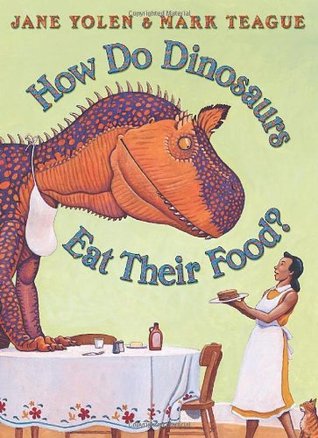
How Do Dinosaurs Eat Their Food? by Jane Yolen and Mark Teague, honestly the entire "how do dinosaurs" line is a great one for kids and very well known. But it is always a crowd pleaser, it rhymes, and has nice big clear pictures that work well in groups.

The Nice Book by David Ezra Stein, this is as much a behavior as a manners book, though it has some manners in there. But it is quite short with clear simplistic pictures. It is a great third book for a toddler group because of it's brevity and eye catching illustrations. It is also my choice this week for (the only book I'll read in) baby storytime.

Other Book Options:
Thank You Thanksgiving by David Milgrim, I would have used this if I had reserved it in time. Short, simple, all about saying thank you and about Thanksgiving. Perfect. My favorite kids Thanksgiving book.
Suppose You Meet a Dinosaur: A First Book of Manners by Judy Sierra, Tim Bowers. Good book, but I already had one on dinosaurs and it was a bit too long. (It would be fine as a first book for toddler storytime, but not as a second.) Plus it focused on general out and about manners not mealtime manners.
Emily's Out and About Book by Cindy Post Senning. Good book, written by the heir to the Emily Post/Miss Manners empire. However it is again a more general manners book and I was focusing on mealtime manners.

Songs:
I don't know specific manners songs, but I added verses to favorite songs.

If you're happy and you know it...
(After the three traditional verses)
If you're polite and you know it, say please & thank you...
If you're polite and you know it, and you really want to show it, if you're polite and you know it...

The Wheels on the Bus
(Do however many traditional verses you want)
The children on the bus say please and thank you, please and thank you, please and thank you...
The driver on the bus says you are welcome, you are welcome, you are welcome...
(Here we use the signs for those words)

By the by I always end "The Wheels on the Bus" with: "The librarians on the bus say READ A BOOK" and use a motion like opening a book (the American Sign Language sign for book).

Flannel Board:
I cheated here and used the Very Hungry Caterpillar flannel board. Hey, it's about eating!

Craft/coloring page:
We don't do crafts, just coloring pages. So we did a turkey coloring page. A very simple craft is to let kids decorate placemats. Either just coloring placemat sized sheets of paper or even gluing on shapes that represent where the fork, knife, plate, etc go. They can be "flash laminated" with contact paper. I have done this in the past and it was widely popular.

Hand Stamp:
A turkey for thanksgiving, or a star because stars use good manners. Or a Thank You one from the card making section of the craft store.

There you go - this is a widely popular storytime (at least for the parents). And it probably reaffirms the role of librarians in socializing to a specific set of class norms, but I can live with that.

Friday, September 19, 2014

Rhythm Storytime (flannel friday)

This week I did a rhythm lapsit storytime inspired by a book I found on the new book cart last week. It was so much fun and so easy. Almost any song or fingerplay works with this theme!

(Lapsit storytime = 18 to 36 months with caregivers in the room) Here's a general outline, though of course I'm talking about our "core" songs that we use every week, feel free to substitute in your own.

Intro: After our standard opening song, I asked the kids if they knew what rhythm was. Then we all clapped together. Than faster. Then in a very simple rhythm. (Four beats, clap clap rest clap)

Wiggle game (follow the monkey)

Book: Cha-Cha Chimps by Julia Durango
This is one of my all time favorite books. I will read it for any possible theme: monkeys, dancing, jungle friends, counting, rhythms, etc. I love the repeated chorus "ee-oo-ah ah ah 9 little chimps do the cha cha cha". I get the whole group to say it with me. And it rhymes and has a great beat to read it to.

Songs and movement: Here we did our normal, every week songs (I'm a little teapot, head shoulders knees & toes, etc). As well we did the Grand Old Duke of York, repeated that faster and slower.
Grand Old Duke of York is a great faster, slower rhythm, but it also happens to be one of my favorites.

Wiggle Rhyme

Book: I Got The Rhythm by Connie Schofield-Morrison and Frank Morrison
This was the new book that inspired me. Very fun, happy, colorful story of a girl who walks around her neighborhood hearing and finding the rhythm. Quite short text on each page, one sentence plus a rhythm you can do (stomp stomp or clap clap). Great for toddlers with short attention spans and great for audience participation. Definitely going into my storytime rotation. Bonus points because it is a diverse book.

Songs We sang a piggyback version of "If you're happy and you know it" with "If you've got the rhythm and you know it". The only other words I changed in that song was "and you want the world to know it" became "and you want the world to hear it". You could add in other rhythms besides clapping and stomping like snapping and ding-dong-hip-shakes.

Wiggle Rhyme

Flannel
This flannel board is in our library's collection and pre-dates me. I'm not sure who made it, but it was printed on pellon with a standard printer and then colored in. I don't believe it was purchased as a commercial set. Of course it is the illustrations from the amazing Peanut Butter and Jelly by Nadine Bernard Westcott. Printing on pellon (or another non fusible interfacing) is a great way to expand your flannel board set without having to have incredible artistic abilities. I will do a post on it someday.


I love this rhyme as a story, but as a flannel it works really great too. We put up each piece as we sing that verse of the rhyme and do the hand motion and in between each verse, we clap with the chorus.

Early Literacy Moment:
At the end we have all the illustrations up and I did a quick talk about how when we make a PB&J sandwich we do this THEN this THEN this and how great it is to learn about steps and orders things happen in (what Every Child Ready to Read v1 called narrative skills). I told parents that learning about sequences of events and being able to tell things in sequence was an important part of building reading comprehension and would help them all the way up to their SAT tests. I encouraged them to talk through the steps of making lunch that afternoon together.

More Songs & ABCs & Counting
Instead of just counting, we did this rhyme (to the tune of 10 little Indians):
1 little, 2 little, 3 little fingers
4 little, 5 little, 6 little fingers
7 little, 8 little, 9 little fingers
10 little fingers on my hand!
10 little fingers dancing in the air,
10 little fingers dancing on the ground
10 little fingers dancing in the air,
10 fingers dance everywhere!

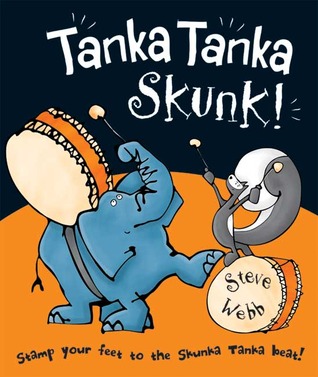
Book: Tanka Tanka Skunk! by Steve Webb
This is another one of my favorites. Tanka and Skunka love to play the drums. You say their names and the names of other animals and play the drums so you can hear the beat of each name. For example caterpillar's name has four beats. I've passed out rhythm sticks to kids so they can beat along with me, but this time we just played our leg drums. Bright cheerful pictures, so much fun for audience participation, and amazing early literacy phonological awareness! (also easy to skip pages if you have a rowdy group like I did.)

Close it up:
Insert your favorite closing songs and rhymes here.

That was this week's rhythm lapsit storytime. We had tons of fun - hope you can do it too!


Thursday, May 08, 2014

Guidelines (Rules) for Storytime

Recently we've been tightening up on some of our storytime procedures and it has led to confusion from the patrons. We're using signs outside the storytime areas when necessary and we are adding guidelines to the back of our storytime flier.

Our storytime flier is a quarter sheet/post-card sized flier that lists every storytime in the system. Each location has slightly different challenges and rules so we needed to be generic enough to apply universally. At our main location, people coming late can be extremely disruptive because the only way into the room is to walk directly between the audience and the storyteller. Thus the door is closed and there is only one "late admittance" window during the songs after the first book. Also we sometimes hit firecode maximums and have to close programs due to being full. All programs are first come first served, no reservations. Other locations have entrances in the back and less stress on space and are able to allow parents to come and go freely.

I'm verbose (no kidding) but we wanted to keep the guidelines on the shorter side. It was also important to focus on reinforcing positive behaviors rather than listing "don'ts". That is why we are calling them Tips or Guidelines and talking about making storytime successful. I wanted to start with a bolded action statement and then an explanation. Of course all language is gender-neutral, but I also wanted it relationship-neutral. All sorts of caregivers bring children to storytime so we avoided the "your child" phrasing.

Number three is the one we debated the most. I started with the phrase "overly emotional" which another librarian pointed out was too formal and "bad day" was better. We left in disruptive as well as bad day because some kids are having great, happy, exuberant days that are just as disruptive to storytime as a child having a meltdown. They just hit the other end of the scale and are too happy/excited to sit during stories.

Naturally we reinforce all these things verbally at the start of every storytime. But, especially with the latecomers issue, it can be helpful to parents to have advance warning about those expectations. I've had some very disappointed parents when they couldn't get into a storytime that was full/already started. And if you've never been to a storytime, it can be good to get a sense of expectations. Anchorage is a very diverse community with a large immigrant population who might not have a cultural tradition of library storytime.

Why yes, I did rather overthink this. And the thing is, I'm sure I'm not done overthinking it. I bet I'll edit again before the year is out. But for now, here is what we have.

Tips for a Successful Storytime
  1. Sit, sing, & listen to stories together. The more you participate in storytime, the more children will participate, enjoy, and learn from storytime.
  2. Please be timely. Storytimes are short and every minute is full of fun and learning opportunities. At some locations, we may not be able to accommodate late comers or have size limits.
  3. Don't be afraid to leave. Some days children aren't in the right mood for storytime. If a child is having a bad day or becomes disruptive, please feel free to take a break and try again.
  4. Please enjoy your food, toys, and cell phones after storytime.
We're working on putting these on a sign outside our storytime door as well. I'm interested in hearing what everyone else is using as storytime rules/guidelines/tips, parent expectations!

Thursday, April 10, 2014

Piggyback songs - baby specific customization

Let's keep talking about piggyback songs. Once again these are songs that take a familiar tune and change a few or all of the words. They can be customized for themes, your location, or your family.

It's a great early literacy trick because it helps kids hear the rhymes/phonemes in words even more clearly when contrasted with what they are familiar with. Also parents/caregivers can catch on to the new song much easier than tackling new words and a new tune at the same time.

Last time we talked about Alaskan piggyback songs, this time let's talk about baby storytime piggy backs.

There isn't a storytime that goes by without me doing a piggyback song, but they are my favorite for baby storytime. Here we call baby storytime, Mother Goose time, and I took it over when I came back as youth services coordinator in December. I structure it as 90% songs with one flannel/puppet activity and one story  followed by open playtime. but that's another post.

This piggyback to Frere Jacques is one of our Mother Goose staples. We sing it every week.

I Love Baby
(tune: Frere Jacques)
I love baby, I love baby
Yes I do, Yes I do
And my baby love me
Yes, my baby loves me
Very much, Very much

This is a great framework to modify for any situation. You can insert any caregiver (I love mommy, I love daddy, etc.) I've got a version I sing to my new blender when I'm making smoothies at home.

For Mother Goose time, after we sing it once through with "baby" I ask the caregivers to sing their baby's names. (I just sort of hum a noise or sing my child's name.) The first time I did it, about half the caregivers turned the baby around from facing me and sang directly to their child. Perfect response! While I don't know that anyone is doing that at home, I can hope! And I'm showing parents on the spot how to modify a song quickly.

And just for giggles, here's the other version I sing a lot, but mostly to myself at the reference desk the hour before lunchtime:

A song to sing when doing the 12-1 shift on the reference desk:
I am hungry, I'm so hungry
When is lunch? Is it lunch?
Cause I've got yummy thai food
Leftovers from last night's thai food
Yummy noodles, Nom nom noodles

Start practising creating piggy back songs on the fly (perfect shower singing) and you'll be making lots of them in no time. And hopefully if you get caught singing something like this, no one commits you. They've not stuck me in the insane asylum.

A song to sing while making a green smoothie:
Let's start blending, brand new blender
Juice that fruit, grind that flax!
I'm so glad I got the nutribullet
Even if my husband laughs at me
Add more juice
And more spinach

Wednesday, April 02, 2014

Alaskan Piggyback Songs

I absolutely adore piggyback songs. For those of you who don't know, piggyback songs are songs that "piggyback" on an existing well known children's tune with slightly (or greatly) modified lyrics. They're great in storytimes because caregivers and children already are familiar with the tune and rhyme/rhythm structure and so pick up the changes easily.

Eventually I will write up a post about how I use piggyback songs. Some I sing alone and some I sing as a "second verse" to their well known cousin.

I am starting a series on piggyback songs because I use them constantly. This week (Monday) was Seward's Day where we celebrate the purchase of Alaska from the Russians. Apparently the Russians are petitioning to get Alaska back. However since that seems an extremely unlikely outcome, for now we will celebrate as I share some of my favorite Alaskan piggyback songs. It helps that I live in Alaska, but perhaps you too want to do an Alaskan storytime for the Iditarod? Or just because Alaska is ridiculously cool? A few of these will work for general Northern or animal storytimes.

Maybe someday I'll get all fancy like the good folks at jbrary and make videos of myself singing these songs.

Twinkle Twinkle Northern Lights
(tune: Twinkle Twinkle Little Star)
Twinkle twinkle northern lights
Sparkle in the Arctic night
Up above the world so high
Blue-green ribbon in the sky
Twinkle twinkle northern lights
Shimmer in my dreams tonight

(Motions: sparkly/wiggly fingers for twinkling lights, draw a ribbon in the sky, tuck your heads under your hands in the "sleep" position on dreams, or just improvise)

BALTO!
(tune: BINGO)
There was a musher had a dog and Balto was his name-o
B A L T O
B A L T O
B A L T O
And Balto was his name-o

(Continue as you would for Bingo with clapping and replacing letters with clapping. This is a great one to use during Iditarod time and to use with felt letters. You can pull off the letters one by one or cover them up with felt stars as each letter becomes a clap.)

Itsy Bitsy Grizzly Bear
(tune: Itsy Bitsy Spider)
The itsy bitsy grizzly bear climbed up the honey tree
Down came the angry bees and stung him on the knee
Out came the mama bear and kissed away the pain
And the itsy bitsy grizzly bear climbed up the tree again

(Motions: make grizzly bear claws climb up; pointer fingers are bees that circle and poke your knee, mama bear comes out in big arm motions and kisses, and grizzly bear claws climb up again.)

Moosie-Moo
(tune: Here we go Loopy Loo or Here we go Looby Loo, depending where you grew up)
Here we go Moosie-moo
Here we go Moosie might
Here we go Moosie-moo
All on an arctic night

Here we go Moosie-left
Here we go Moosie-right
Here we go Moosie-left
All on an arctic night

Here we go Moosie-up
Here we go Moosie-down
Here we go Moosie-up
Now the moose goes all around

Here we go Moosie-front
Here we go Moosie-back
Here we go Moosie-front
Here we go Moose ATTACK!

(Add verses as you need. Motions: make moose antlers with your hands on head and dance around with the lyrics. Charge and giggle on the last line.)

Moose Pokey
(tune: Hokey Pokey)
You put your antlers in,
You put your antlers out,
You put your antlers in and you shake them all about
You do the Moose Pokey and you turn yourself about
That's what it's all about!

You put your right hoof in...
You put your left hoof in...
You put the whole moose in...

(Seriously you can figure out the motions to this one on your own. I have faith in you. Also can be Moosey Pokey if you need to keep the beat structure closer to the original)

I've got more, but they are mostly animals I'll save them for a future Alaskan/northern animals storytime post.

Happy singing!

Monday, March 24, 2014

Grant Writing - suggested verbiage

I'm in the middle of grant writing season. I think there's a season, most of them seem to be due around April 1st. Prior to becoming a youth services coordinator, I'd applied for a few smaller grants directly and been a worker/helper bee on others. But nothing too extraordinary. Now I'm working (often with a team) on stuff in the 6 figure range. It's scary that people are willing to trust me with that sort of money and no one blinks an eye at me asking for it. Huge case of imposter syndrome, but that is another blog post.

When I was chatting with my sister about the endless narratives involved in grant writing, she suggested the following. I humbly sumbit it here for anyone else who needs a bit of levity as the words of their grant application start to blur.

Dear people with money,

The library is amazing! People love us, we change lives and do awesome things. We need more money to do even more awesome things. Please send check.

XOXO,
Elizabeth

Thursday, March 06, 2014

Mods for Storytime When Pregnant

I'm currently 6 months pregnant, visibly showing, and starting to have some difficulty getting around. Mostly I'll go to lean against a counter and it's much closer than I think it is. Or I try to squish between cars in a parking lot and my stomach doesn't suck in and I don't squish anymore. So far I can still touch my toes (I've been told that will go away).

As I was lamenting to my husband that every week "head, shoulders, knees, and toes" gets a teeny bit harder and I'm not sure I will make it to the end of the storytime session, he suggested I skip that song. Let's all pause to note in his naive, pre-fatherhood days, that he thinks you can just skip head, shoulders, knees, and toes without a full on toddler riot. I've been brainstorming solutions and before last week I had: just wave in the general direction of my feet and hope everyone knows what I mean.

Last weekend though I was at the Alaska Library Association annual conference and joking about this with another librarian who had a great solution. (Apologies because it was an off the cuff conversation between sessions and I can't remember who suggested this.)

Head, Shoulders, Knees, and Toes becomes Head, Shoulders, Knees and Hips!

Of course you need to change nose (in "eyes and ears and mouth and nose") to lips to maintain the rhyme structure. (DUH, rhyme structure is very important to toddlers, helps build phonetic awareness, and soothes the feelings of OCD librarians who need the rhyme too). However you don't want to say "mouth and lips" because that has you pointing to your mouth twice in a row. Boring! Thus "eyes and ears and nose and lips" works perfectly.

If you're a children's librarian, you're nodding along with me (and humming under your breath). If you're not a children's librarian, you've probably stopped reading. Or are totally confused that I just put that much time into this.

I haven't had to do any other mods for storytime yet for pregnancy. The next thing to go might be the little bitty storytime chair because we have a rhyme that has you jump out of your seat. It's harder when you're large, pregnant, and sitting on a small stool about 8 inches off the ground.

This morning in toddler storytime (here called Lapsit) we did Head, Shoulders, Knees, and Toes and followed it with Head, Shoulders, Knees, and Hips. The moms laughed at the explanation why and some of them who are further along than me looked grateful. The kids are always just happy to sing and dance. And we felt very jaunty ending our song with our hands on our hips.

Friday, January 31, 2014

Doing storytime when your voice is MIA

Periodically, and for me today was one of those days, you have to do storytime with a cold or a complete case of laryngitis. Sometimes you're not sick enough (or contagious enough) to miss work. Sometimes there's just no one else to do it. So you do what I did this morning, grab a cup of hot tea, and shoulder through.

Side note: as a manager, STAY HOME if you're sick. I have worked with a thousand people (almost always women) who come in even though they are sick because "we are so far behind" or "I knew how busy we would be" and so on and so forth. I've been tempted to do it myself. It's a nice thing, a sign that an employee is invested in their job and that you've created a workplace team culture.

But it is also overall very detrimental. When people come to work sick, they are often increasing the amount of time that they will be sick. It took me years personally to learn when I get sick if I can stay home towards the start, I'll often be out of work only 1-2 days, not the 3-4 days if I try to "power through" it. You don't get as much done when you're sick. I'd rather have you take time off sick for 2 days and then be back to full steam, then work at half power while sick for two days and still take a couple of days off because you've made yourself much worse. And of course the damage is magnified because you're also spreading your germs to all your coworkers risking even more lost time.

So stay home when you're sick. Which I didn't do today, I have a fairly mild cold, not worth staying home for. And if an employee came in with the same cold, I wouldn't object despite the legitimate objections raised above. However that cold has turned me into a gravelly voiced monster. Thus a blog post, five things on a Friday, for doing storytime when you've lost your voice.

  1. Stick to songs most people know. This is not the week to introduce new songs. Keep it simple stupid. If you're adding an extra verse, give people the words. I used to love doing projector + slides in storytime, but currently we're going lo-tech with easels and flip charts. If people know the songs, you can get everyone started and then just do the motions with an occasional pathetic croak.
  2. If it is really bad, use recorded music. People will forgive you this once. I've whipped up a playlist and attached my iphone to computer speakers, or strung together various songs from Raffi CDs. (Please note this is why you never put my music collection on shuffle everything, you'll skip from classical to hard rock to Raffi and it makes your head spin.)
  3. Find books with lots of participation. Books where kids shout out a refrain are good. Today I used If You're Happy and You Know It by Jane Cabrera. It's a sing along book, so I just rather got them started each page and then croaked quietly along.
  4. Go high energy. This seems counter intuitive, but if you get the kids rollicking and chanting, it's less obvious that you can barely talk. This is a good time jump, shout (encourage them to shout), hop like a frog, roar like a lion, etc. You can not sustain a quiet gentle storytime with sweet songs with no voice, but you can get the party started and croak along.
  5. Call in a video ringer. Show one of those Westin Woods videos the library paid way too much for so you would have public performance rights. Years ago I had totally killed my voice screaming along at a concert. I couldn't vocalize at all, only whispers. I "demonstrated" a new database/story reading service that over our website would read picture books while highlighting the text. I let the computer read the book for me!
Today I went with tips #1, #3, and #4 and still got compliments on storytime. Remember storytime is not about you doing a perfect performance. It's about engaging kids and caregivers to interact with songs, rhymes and books. You don't need a perfect, opera ready voice, you just need energy and a good attitude. Notice my repeated insistence that you croak along, start the wave of energy and just ride it.

So go forth and do your gravelly monstered voice storytime! But if you're really sick, please stay home. Either way, I raise a cup of tea to you.

Friday, December 20, 2013

Job Openings! (and a promotion)

If you follow me on facebook/twitter, then you know that recently I was promoted to my dream position: youth services coordinator at the Anchorage Public Library. That promotion took me away from my beloved Mountain View Branch Library. Unfortunately it happened to coincide with the MV youth services librarian receiving a job back in her home state.

Sometimes timing isn't ideal. But onward we go! I'm mostly telling everyone why the only two librarians at a branch left at the same time so no one thinks something BIG and BAD happened. As a result, I would like to tell you about two job openings. And I'm going to be shameless in asking you to promote this to your contacts. Tweet, retweet, post, please! This library has a a huge place in my heart and I want to see the right people there.

It can be scary to have two new people in one location at once, but rest assured they will have support from the rest of the system to help with adjustments and transitions. And the paraprofessional staff at that location are the best in the system. (I'm biased but it's true.) I can also promise you that I will not be interfering or armchair managering you from my new position - this will be your chance to manage and help shape a library!

Later on I will tell you about my new job, and everything with that, but for now here is a more official announcement:

Job Openings!

The Anchorage Public Library is recruiting two librarians for the Mountain View branch library. Mountain View is the most diverse census district in the United States and the library has become a strong neighborhood partner with agencies and community groups serving the diverse residents and helping to revitalize the neighborhood.  The library itself is only three years old, LEED certified and a welcoming and friendly environment. While Mountain View Library welcomes and provides programming and services for all patrons, the library shares a parking lot with a middle school and is in walking distance of two elementary schools. As a result the library has a large number of thriving youth and teen programs.
                                         
Currently we are recruiting a youth services librarian to plan, present, and evaluate programming for youth from birth to age 18. The YS librarian will also assist with system wide collection development, do outreach to local schools, work on the reference desk, and manage the library in the branch manager’s absence.

We are also recruiting a branch manager who will manage the library staff, facility, and adult collections. The manager also plans and presents programs for adults, builds partnerships with local agencies and community groups, and participates as needed with system-wide initiatives.

For general information about Anchorage Public Library jobs:

For the youth services librarian job:

For the branch manager librarian job:

Both positions will be open until January 7th. If you have any questions about life in Anchorage, Alaska, or the Anchorage Public Library system, I would be happy to answer them!

Saturday, November 23, 2013

Armchair Managering

One of my favorite blogs to read is Ask A Manager. She's non-profit which is a great perspective, but she also answers lots of questions from the for-profit sector. A lot of her columns are answers to job hunters, but a good portion are HR and managerial issues.

My favorite recurring theme is how often people ask "is this legal?" Things are often bad practice, but rarely illegal. She actually did an entire column listing all the things she and another blogger have been queried on as to legal status. Read it, it's amazing.

Earlier this week she posted a great question that I've been thinking about a lot. And making my husband discuss. And my mother. And various other people in my life. I'm going to go ahead and quote the letter, but not the AAM answer or her reader comments. Her readers are intelligent and insightful and the comments are one of the highlights of her blog. I firmly encourage you to go read her answer and the readers comments.

I am a manager of a small HVAC service company. One of our service technicians is refusing to enter any residence where a teenager is home alone, even though we have scheduled this appointment with the parent, and although they can’t be there, their 14-year-old will let him in. This will be the second time in a week that this technician has left the residence without fixing the problem, causing me to get an irate customer on the phone. When our scheduler asks him why he left, his response is that he feels uncomfortable being alone in the house with a female teenager. This technician has three daughters, and I think he is letting his paranoia about his daughters interfere with his judgment.

Our company has protocol in place that if a customer is not home, a technician isn’t to enter a residence, without prior approval by the customer. Our service techs are licensed by the state, with background checks performed annually. In the 9 years I have managed this company, I have never run across this before.

I am having a meeting with this technician next week, and I want to make sure I say the right thing. Several times he has commented that the company cannot hold it against him if he doesn’t want to do something that makes him uncomfortable (this includes not working overtime on occasion if asked, going into any home with mold, and now the above reason.)

I know that we can certainly let him go, but we are a small company and he has been with us for three years now. I’m not willing to do this, until I have addressed these problems, and try to come up with something that will make us both “comfortable.” If this cannot be achieved, then I guess I’ll have no other choice but to let him go.

Any help you you can provide in the way of things I might say to him will be greatly appreciated.

Okay, the way I see it there are two distinct issues here.

1. There are some legitimate policy and safety concerns.

2. The employee believes they can dictate the terms of their job.

Let's start with number one. A lot of the commenters said, and I agree, that it seems odd to allow an adult serviceman into the house with only a minor present. Beyond the obvious false accusation fears (which even if disproved can effectively ruin your life), if there is a change in service needed, more work, additional charges, you usually need the signature of an adult to authorize it and any payments. Some companies want payment immediately and some will bill later.

The last time I let an HVAC guy repair our furnace he wanted my signature twice. First I signed to authorize him to work. Second I signed to authorize the payment on the credit card. A few years ago (in 2006 actually), my grandma sent me into town to pick up some food she ordered for a family dinner. She sent me with her checkbook with the top three checks signed. That worked because it is a town of about 200 people and my grandmother was their queen. I'm thinking that won't work with your average HVAC guy.

The AAM commenters indicate that a number of major companies (like cable companies) have hard and fast policies requiring an adult to be in the residence for service. I'm not sure since I have no minor children to foist repair duties onto, but if I was told that, I wouldn't blink. Instituting a policy like this would be a completely reasonable choice for this company.

I have never been a service person fixing up people's homes, but I would imagine that they are often exposed to various toxins. Having masks available to your techs to use at their disposal would seem appropriate.

Second issue: the employee believes they can dictate the terms of their job. This to me is a MUCH bigger issue. Employers should be amenable to talking to employees about difficulties they're having and adjusting policies where appropriate, but at the end of the day if you're told something is your job, do it. If you can't, quit or be fired. You don't get to not do things because they make you "uncomfortable" and then expect your employer to not penalize you. That isn't the way the world works.

Also HVAC is kinda a big deal. I've had to call in for an emergency repair on a Sunday in January in Alaska when it was -8 and the heater stopped working. (Side note: I had to call 3 companies before I got one that had a free tech to send to my house. He spent 20 minutes working, charged $180, and was on the phone the entire time scheduling techs for other calls. Librarians, we are in the wrong field.) If I was not told that there was a requirement to have an adult home (and it sounds like this company is already emphasizing that someone must be home when they do the scheduling) and then the work was refused I would be really upset.

Let's look at this conversation could have been handled.

Tech: I'm uncomfortable going into this house because the only one home is a 15 year-old girl.
Boss: Really? No one's ever mentioned that before.
Tech: Yeah, a false accusation could ruin my life and your company.
Boss: Fair point. But I talked to her mom when she scheduled the call and she said that only her daughter could be home. It's your last call on a Saturday, go ahead and do it since the mother authorized you to be there with her daughter, we'll talk about it on Monday.

Then on Monday there would be a discussion and a potential change in policy to be emphasized to customers when scheduling appointments. Or perhaps all your company wants to do is get confirmation from the parents that it is okay to work in the house alone with a minor. I think that's a risky policy, but a company could do it and require a tech to do so. However if the tech had still walked away from those jobs, write it up. Hopefully you have a policy about how many write ups = disciplinary issues or termination.

Ideally you create an environment where management is responsive to concerns from employees and employees feel free to bring them to management.

Another potential conversation:

Tech: The last home I was called out to had some really nasty black mold all over the place. I can't do that.
Boss: Yeah, we see all sorts of stuff in people's houses. (Shakes head sympathetically). But we still have to do a job. I'm going to get you some protective masks to wear whenever you feel they are necessary.

And the overtime thing: it's legal to require overtime. It's legal to hire a person for two years and never require overtime and then when your company grows start requiring overtime in the third year. (I don't know that is the case here, just making a point.) If the employee doesn't like it, they can find another job. Lots of people work schedules that aren't ideal, it's life. This presumes of course that you are paying them any legally required overtime pay.

For years my mother was in charge of payroll at a major company and I didn't see her as often as I liked (or she probably liked) during January/W-2 season, but on the other side her company offered her the flexibility to be a room mom and take off in the middle of the day to throw parties for our classes.

So this is my last example conversation, presuming everyone is a reasonable person:
Boss: Okay I have three more calls for you to go to. I'm authorizing overtime pay.
Tech: WHOA! I'm done for the day. I've promised to take my wife out for a date.
Boss: Sorry about this, but it's the first bad cold snap of the year and everyone's heater is breaking. I need you to work these three calls.
Tech: Fine. I can use the overtime money to take my wife out to that B&B she likes next weekend instead.

I think this entry really resonated with me because it is a management issue I've struggled with a lot. I want to be open and accommodating. I ABSOLUTELY want to hear my employees concerns and work with them towards solutions. And every now and then it just comes down to "I'm the boss and you need to do this" but it's always better to try to talk it out and not have to flat out say that. I'm not perfect at this, still working at it.

Thursday, October 31, 2013

Halloween Reading Recommendations

I'm going to go a little bit out of the norm here for some Halloween choices (also I'm barely squeaking this in under the wire). All of these books are frightening and upsetting in their own way, but none of them are the typical Stephen King style choice. (This also kills 3 review birds with one stone and slightly shortens my queue of read but not reviewed books.)

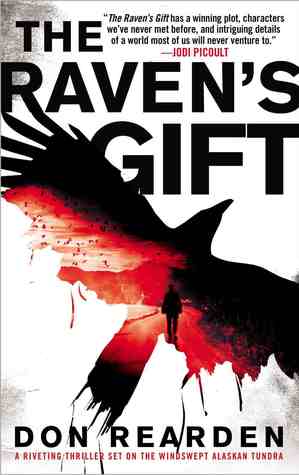
The Raven's Gift by Don Rearden. 288 pages. Published June 2013 by Pintail. (First published in 2011 in Canada).

Confession: I "know" Don through twitter, he is an Anchorage resident and University of Anchorage-Alaska professor. I'd been meaning to read his book for a while, but sped it up after he agreed to participate in an Alaska Book Week event at the library.

John Morgan and his wife Anna know life will be hard as teachers in a primarily Yup'ik village in rural Alaska. That challenge turns to a nightmare when a plague hits and much of the population is wiped out. Faced with trying to hike his way over thousands of miles of tundra, John finds unlikely alliances and horrors waiting among the other survivors.

My husband is Yup'ik and travels to rural Alaska for work and family reasons. He didn't read the book before the author event, but loved hearing Rearden talk and started it the next day. Since then he has been enthusiastically recommending this book to everyone (a few friends, his coworkers) and lending out our copy left and right. He knows far more about rural Alaska than me and says Rearden has it spot-on.

The thing about rural in Alaska is they mean no roads. The only way in is often a boat, snow machine, or usually a small plane. There are no easy fixes or quick resources when trouble happens. It is one of the most isolated environments on Earth. And that alone is scary.

There is a lot of historical groundwork for the devastating consequences of a plague/illness/flu epidemic in remote Alaska. Locals still refer to "The Great Death", a flu epidemic in the early 20th century. It is absolutely one of the most realistic horror books I have read in a long time.

Rearden does an excellent job of portraying the isolation and fear of any survival situation and compounding that with the extremes of the arctic tundra. His narrative switches between three timelines, weaves in traditional Yup'ik stories, and incredibly portrays a place that seems surreal to the modern city dweller. The book was descriptive enough that I felt cold reading it.

And it's creepy. So creepy. I can't tell you about the creepy parts without ruining it for you. But I will say what I expected to be the HORROR was not the scare that I had by the end of the book.

If you want a good survival story, a creepy look at an all too realistic situation, or a really good portrayal of rural Alaska, I urge you to pick up this book.

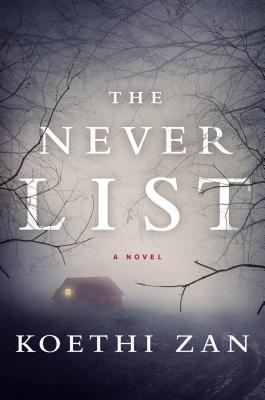
The Never List by Koethi Zan. 303 pages. Published July 2013 by Pamela Dorman Books.

Here we have a "pulled from the headlines" style thriller. After years of keeping a "never list" of actions to be avoided to stay safe, Sarah and Jennifer think they have beaten the odds. But one night they get into a car and wake up in a basement. For the next three years they and other young female captives are sadistically tortured in their basement prison. But it is when they escape and must deal with the consequences of those years and their choices, that contain the true horror.

There are far far far too many of these types of cases in the news. 2010's Room was another novelization of such a horrible case.

Here the story is told in flashbacks between an adult "free" Sarah and the scared college girl in the basement. The horror here lies in not a monster or zombie lurking in the shadows, but within the hearts of man. (And yes I'm humming the old Shadow theme song while I type that cliche).

I don't normally go for thrillers or crime novels, but this one appealed to me because of the psychological aspects of the story. Much of it is about the breaking down, and rebuilding of Sarah's mind. Overall, captivating page turner and fairly well written. There were a few characters I wish I had more development on, but ultimately it was quite a good book.

Escape from Camp 14: One Man's Remarkable Odyssey from North Korea to Freedom in the West by Blaine Harden.

Published March 2012 by Viking. 205 pages. (I listened to an audio version.)

Unlike my other choices for Halloween, this book is non-fiction. Sometimes the scariest things in this world are all too real. Shin Dong-hyuk was the first North Korean to escape from a "total control zone" (prison/work camp) to life in the West. He was born and raised in the prison camp under the Kim policy of punishing the families of offenders to the "third generation". Because his father's brothers had escaped during the Korean war, he and his family were destined to always live in prison. Shin was himself the product of a "reward marriage" arranged by the guards between his parents.

Most of us can not fathom what it is to grow up in an environment without even knowing the meaning of love, to view your mother only as competition for food, your father and brother as virtual strangers.

The view into a closed world offered here is both horrifying and honest. Shin opens up about some of his own actions aware that he might be judged harshly.

One interesting thing I learned, South Koreans are in favor of unification but not right now. Unification with North Korea would be very costly and the extremely robust South Korean economy would bear the brunt of it. Projections show that it would raise taxes for 60 years. (In comparison that is like if we were still paying off my grandfather's fight in WWII when I graduated college.)

If you want a true life horror this Halloween, it doesn't get scarier then life in a North Korean prison camp.

Friday, September 27, 2013

Review - Burial Rites

Lately in Anchorage, it has been gray and rainy. This typical fall weather in Alaska always makes me want to curl up in a chair with a cup of tea and a book that helps me forget the rest of the world. I had an advanced ecopy courtesy of NetGalley that perfectly fit the bill. The weather in the book was also often cold and overcast: perfect match!

Burial Rites by Hannah Kent. Published September 2013 by Little, Brown and Company, 336 pages.

Bottom Line: Highly recommended. A melancholy look at life in early 19th century Iceland and the last person to be executed in that country. Really good at exploring themes of loneliness, relationships, redemption, and society. Fascinating glimpse into Icelandic society. Should be picked up by most public libraries. Will appeal to historical fiction fans and literary fiction readers.

In 1829 in Iceland, two men have died horrible deaths and three people are tried for the crime. Two are sentenced to death and one to life in prison. While they await confirmation of the sentence from the ruling Danish officials, Agnes is moved to a farm in the valley where she grew up to be held prisoner in the home of a minor government official.

Of course the official and his family have no prison on their land, so Agnes lives with the family as a servant, gradually revealing her own story and becoming part of that family's story.

Utterly fascinating. I didn't know much about life in Iceland and I loved this peek at how it worked. For example I didn't know that Iceland was ruled over by the Denmark (and the Danish King) from the 13th century until the end of WWII. All the little details about life in such a harsh Northern climate, on farms where people were barely surviving were beautifully woven into the story. At no point did you feel like you were receiving a history and sociology lesson, but rather that you were seeing into their society. (It should be noted that the author is an Australian who has spent considerable time in Iceland.)

The setting is dramatically described as both culturally and physically harsh. Flashes of Agnes' life are revealed as we see how hard it was to be an unwanted child, a servant, in a time where survival was not guaranteed even for the wanted children of well off farmers.

Writing is lyric and melancholy. Haunting and mesmerizing are adjectives used to describe books so often as to become meaningless cliches, but they apply.

What I loved about this book that I didn't realize how much I enjoyed it until after a few weeks of deliberation was the lack of didactic moralizing. This isn't a story against the death penalty. It is just a story, just a thing that happened. Steinbeck did the same type of storytelling with Of Mice and Men. These are the tales of how people live, how horrible things can happen without horrible intentions, how life can be hard, survival a challenge and beauty still exist.

As a funny note, I read this as an ebook advanced copy from NetGalley. The library's copy arrived on Wednesday. On Thursday a high schooler arrived with an assignment to read any book more than 250 pages not by an American author. I book talked this one to her and she left with it very happily. Fortuitous timing.

Saturday, September 07, 2013

Review - The Returned

Please don't let the fact that this is published by Harlequin dissuade you. There's nary a heaving breast or throbbing member to be found. Instead you have some very well written speculative fiction.

The Returned by Jason Mott. Published by Harlequin, August 27th, 2013. 352 pages.

Bottom Line: Not a flawless book, but a very good book. Focusing more on human nature and relationships than supernatural, it is a nonetheless eerie book that succeeds in getting under the skin of the reader. Recommended for purchase by most librarians. Will appeal to fans of China Mieville and Carlos Ruiz Zafon.

All around the world, the dead are returning. They're not coming back as zombies or ghosts or vampires (not that type of novel), they're just coming back. Thousands of miles from home, with no memories of the afterlife, just returning in much the same condition they were when they died. This presents problems when, for example, a group of Nazi soldiers comes back in a small town in rural America. At first the Bureau tries to reunite the returned with their families, but not every returned is welcomed back. They bring out a lot of complicated feelings. And the problems grow as the numbers of returned grow.

At the heart of the novel is the small town where the Hargraves live. They face complicated feelings when their young son, drowned nearly 50 years earlier, is returned. And then their town is taken over for a detention center for the returned. As tensions burn between the returned, the soldiers, and the "True Living" townsfolk, no one is ready for the chaos.

The concept is fascinating. The dead returning as almost but not quite living with no explanation. The reader receives no more explanation than did the people of the novel allowing us to share in the mystery and frustration.

The setting is incredible. You see this small town, a bit run down by the economy, filled with people who aren't good or bad but just people, and you feel like you could live there. Or that you do. Because it is every small town, but it is also its own place.

Characterization was fantastic. Even the "villains" are fully developed complex characters. No one was predictable. Some of the characters I thought I knew the best managed to surprise me right at the end, but surprise me in a way that was consistent with their character and shed light on every previous action. In other words, some of the best characterizations I have ever felt.

Great premise. Fantastic setting. Incredible characterization. Mediocre plot. The plot pacing was uneven. And that kept everything from entirely gelling together. This book was very good, but just short of great.

Between the chapters about the main characters, there are interludes written from the point of view of a returned. These are some of the most beautiful and haunting, little glimpses into the confusion. They were some of my favorite parts of this novel. I think I would really have enjoyed seeing this novel as a series of short stories set in the world dealing with this returning of the dead.

But I can't wish for a book that doesn't exist. And I did really enjoy this book. I do recommend it. It's speculative fiction without being hardcore, returning from the dead without being zombies, paranormal but not frightening, it does what great literature does, it makes us look within ourselves to ask how we and our neighbors would handle a situation.

Tuesday, September 03, 2013

Change is Hard

One of my new goals is to read at least one book that might help me be a better librarian or manager a month. They don't all have to be actually aimed at librarians, but I will be reviewing them under the tag "professional lit". To that end my first book was about change. It was the August book, but I am a bit delayed on the blogging.

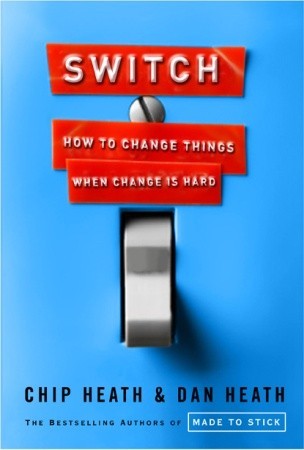
Switch: How to Change Things When Change is Hard by Chip Heath and Dan Heath. Published in 2010 by Crown Business. 320 pages.

Change is ever present in our personal and work lives. A lot is being written about how libraries are facing a crisis/ebook revolution/time of change. And yeah. But that was also true when we went to computers and integrated library systems (ILS for the acronym geeks out there). It was true when we dumped the card catalog and went to OPACs (online public access catalogs). It was true when we racially integrated libraries. Back in the 16th century there was probably a librarian grousing that switching to the Gregorian calendar would really mess up the acquisition records.

Okay a lot of those things happened before my time in librarianship. But my point is that we have always been a profession who faced change.

My library system has been going through a lot of change. As a middle manager, I've been responsible for helping to implement some of that change, but I have not always been in on the meetings or decisions to make that change. And of course my personal life has had a lot of change lately, some good some not so good. Thus change and change management are of special interest to me.

Bottom Line: This book is really good. You should read it if you are interested in change or management. It has a good basic framework that is supported with practical examples from business, social work, non profits, and personal life. It avoids the trap of speaking too much in scholarly jargon and produces an approachable book that doesn't feel dumbed down.

Basic framework: To make change happen, balance the rational and emotional parts of people's minds. Give motivation to their emotional part of the brain and clear direction to their rational part.

I'm not going to quote the entire book verbatim, but here are a few relevant examples.

Clear direction to the rational part of the mind. For example we could say "be more friendly and welcoming to the patrons". That's really vague. Most staff think they are friendly and welcoming, regardless of how they are perceived. A few years ago we heard a good framework at a customer service training. It's the 10-4 rule. When a patron is within 10 feet of you, make eye contact and smile. Acknowledge them non-verbally. The patron feels welcomed and is more likely to approach you if they need help. When a patron is within 4 feet of you, verbally greet them. Super easy and works like a charm. This very clear directive makes a world of difference in customer service.

Another great piece of advice. Shrink the change. Don't make people change the world all at once, give them small achievable steps.

Give people a head start. The example in the book was of a car wash that gave some customers a loyalty 8 punch card (and then the 9th was free) and other customers a 10 punch card to earn a free wash. The customers with the 10 punch card were told they were given two free punches for loyalty. So both groups had to earn 8 punches for the free wash. The customers who thought they had a two punch head start were more likely to complete their punch card.

We did something very similar with summer reading this system. When our youth services librarians visited schools, they gave out a large bookmark style summer reading promo that also had the first few lines of the summer reading chart so kids could start tracking the time they were reading. They were really excited to get a "head start" on their reading and were already invested in the program and (hopefully) more likely to come in and sign up.

Last crumb from the book: tweak the environment. To make change work, to make it easier and more likely to stick, change the environment in favor of the change. Years ago I worked at a library that wanted more people to use self check machines (staff cuts, staff reduced by attrition, more effective). Rather than just putting up a self check and hoping for the best, they totally redid the circulation desk. Instead of 3 clerk stations and one self check, you had to walk past four self checks to get to the only clerk station. That, and friendly staff members offering to help them use the self check, really helped people convert to self checks.

My favorite comment of that system, when someone worried that seniors wouldn't be able to deal with the new machines, was from my branch manager. He replied that those same seniors had been using ATMs happily for 20 years. And it really wasn't a problem.

In summary: this is a great book for librarians and managers and I highly recommend it. It has given me a lot to think about in terms of change in our system and in my own life personally.

Friday, August 16, 2013

Review - The Wicked Girls

Published first in the UK (last year) and in the United States this summer, I got an advanced copy of the US edition Wicked Girls from the Early Word program. This is not a book I would have normally picked up, but I could not put it down. Perhaps I like mysteries/thrillers more than I thought I did or perhaps this book is just THAT GOOD.

The Wicked Girls by Alex Marwood. 378 pages. UK version published by Sphere in 2012, US version published July 30, 2013 by Penguin.

Bottom Line: Recommended for most all public libraries. Great summer read. Would appeal either to mystery fans of sociological issues fans (ie Jodi Piccoult).
Two 11 year-old girls suffering from different and very similar lives of neglect meet for one summer day. At the end of that day, they are murderers. Their subsequent prosecution, imprisonment, and release under a protection program that changes their identities all come to a head 25 years later. Kristy is a journalist covering a serial killer and Amber is a cleaning supervisor who has found one of the victims. Switching between the current series of murders and their fears for the lives they've established should their secret be revealed.

When a child commits a terrible crime, there is a lot of speculation in the media on why (bad parenting, violent video games, natural sociopath, pick your disorder du jour). This book can not and does not try to give an overarching reason. Instead it tells a very plausible story of two girls, one awful day, and the adults they become.

At no point is this an apologetic tale, the horror of what happened and the culpability of all involved is never sugarcoated. However for those of you like your thriller with a healthy dose of psychological introspection, Marwood has written a fantastic tale for you.

Setting: an economically depressed, working class town on a cold rainy coast in Britain. It is perfectly described. Have you read The Working Poor or Nickel and Dimed? What I love here, beyond the obvious thriller/mystery, was the contrasts of the recession on Kristy (solidly middle class but struggling with her husband out of work) and Amber and her working class/minimum wage colleagues. Fantastically done, insightful societal portraits. Ultimately, that is why this appeals so much more to me than your average mystery. The vivid characters, detailed setting, and multifaceted look at a society's larger issues are incredibly compelling. More than the mystery, that keeps the reader turning the pages and thinking about it long after you have finished reading.

Oh yeah and the mystery is good and fast paced. You will want to know what precisely happened on the day when they were children and who is killing people now. I had called out the red herring and the real murderer pretty early though. But it wasn't enough to stop me from reading the rest of this book as it usually does with mysteries. Seeing how Marwood would get us to the end kept me reading. Overall this is just a fantastic book.

Thursday, August 15, 2013

Orson Scott Card, censorship, and questionable morality

Orson Scott Card's Ender's Game is finally going to be made into a movie. I could not be more excited. I might have had a barely contained squeal in the theater the first time I saw a trailer. Love those books. I've loved most everything I've read by Orson Scott Card and I've read most of his works that aren't barely disguised allegories for Mormon theology.

Oh yeah, Orson Scott Card is a member of the church of Jesus Christ of Latter Day Saints, a religion not known for its tolerance. And he was a board member of the National Organization for Marriage until very recently. And by marriage, that group means only heterosexual marriage.

For this and similar reasons, a group of LGBTQ geeks has organized a boycott of Ender's Game called Skip Ender's Game.

I agree with their sentiments, mostly. The New York Times has an editorial that explains it better than I probably will. Basically this is a bit different than the Chik-Fil-A boycott. Their profits were being directly funneled into anti-gay causes. And creators have throughout history had crazy opinions separate from their creations.

That said, it is possible I am making excuses because I really want to see this movie. I don't know. Perhaps the best reason to boycott it is the likelihood it will be a disappointment. I should keep Petra, Ender, Bean, and all my other battleschool friends the way they look in my head.

I could not watch it in theaters and grab the DVD from the library (the library will buy the number of copies it does based on other factors, not my borrowing habits) for free instead of giving it money directly at the theater or indirectly through Netflix.

And it wouldn't end my life to skip it entirely. I'm just not sure that it will make any difference. Do you know what makes a difference in these types of social issues? For every loud mouth bigot, that there are 10 or 100 people quietly living their lives. Because when you know a couple who has been together, committed and in love for years but able to have any legal protections, your mind starts to change. When you realize that it is fine for your church to not perform the marriage, but that has nothing to do with the state defined contract of marriage and those protections, your mind changes. (For example the Catholic church wouldn't marry my husband and I because neither of us are Catholic or willing to raise children Catholic, but they have no problem with the state of Alaska recognizing our marriage.) And when people in the public eye, quietly come out, newscasters and sports figures, actors, child stars, and singers, that is when mind changes. Honestly, I'm not sure Card has as much influence here.

Orson Scott Card has a vivid imagination. Too bad he doesn't stick to science fiction, but instead uses it to imagine that Obama is recruiting an army of urban gang members. Too bad he has some views that I hate. But does that invalidate all of his contributions in terms of artistic merit? As the Times article linked above is this a form of blacklisting because we don't like his politics? Didn't we (rightfully) hate on McCarthy for doing the same thing? Ender's Game has nothing to do with gay marriage, so why can't we enjoy it for what it is?

What is a socially conscious geek girl to do?

Saturday, August 03, 2013

Body-Positive Self-Esteem Storytime

This is a very quick blog post started by a conversation on Twitter. MagpieLibrarian (aka Ingrid) whom I've never met, but I saw once at ALA and was too shy to say hi, put up a very cool body-positive display in her tween/teen area. You can read all about it here. Also apparently, I am the only person who is hyphenating body positive so I'll stop that.

Then I mentioned that I used to do body positive/self-esteem storytimes as part of my regular rotation of storytimes. There's a million studies out there about negative self-esteem, especially in girls, and how young it starts. We've all seen the articles about the sexualization of Strawberry Shortcake and even My Little Pony. If the marketers are starting that early, anyone who wants to be on the other side of this fight should too. Lest the parents believe I'm pushing an agenda, I call it "I Like Me" storytime.

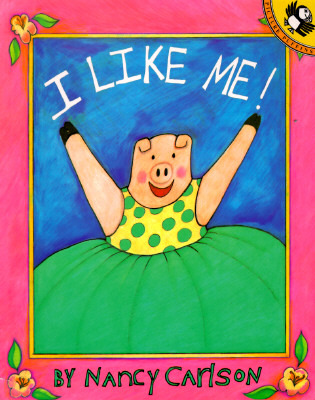
I first got the idea for this story from Nancy Carlson's classic book I Like Me where a vivacious pig lists all the things she likes about herself including her round little tummy. She lists all the great stuff she can do, including ride her bike fast, how she keeps trying after she makes a mistake, and the ways she takes care of herself. But my favorite page is where the pig in her pajamas (admittedly a retro baby doll pajama set but not at all a sexualized look) greets herself every morning with "Hi, good-looking!" It usually makes all the moms laugh, but that is in the tone of voice you read, I camp it up.

There are a whole host of great books available for preschoolers to do a storytime. Many of them are short enough that it is possible (I've done it) to use as a lapsit/toddler program. I'm publishing my list from the last time I did this storytime in 2011. And even then I remember not putting all the books in the packet. Clearly we read 3-4 books at storytime, but we made packets for the entire system that had more books so each librarian could choose their favorites.

While I try to keep up with children's literature, I've fallen a bit behind on picture books since I'm now a branch manager. Please comment on if you know any more.

Possible Picture Books to use:
Incredible Me by Kathi Appelt
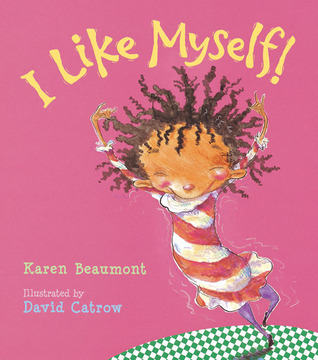
I Like Myself! by Karen Beaumont
Nobody Laughs at a Lion by Paul Bright
I Like Me by Nancy Carlson
I'm Gonna Like Me by Jamie Lee Curtis
Alfred's Nose by Vivienne Flescher
Dog Eared by Amanda Harvey
Happy to Be Nappy by Bell Hooks
Leo the Late Bloomer by Robert Kraus
Good Thing You're Not an Octopus by Julie Markes
I'm A Pig by Sarah Weeks
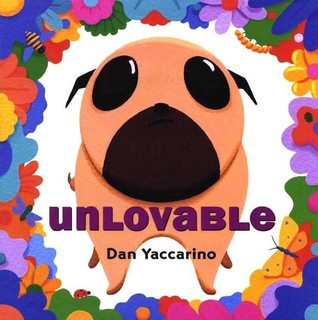
Unlovable by Dan Yaccarino

Flannel board/told stories:
I like to do one flannel or magnet board story at each storytime. It's fun, breaks the rhythm, and helps kids who learn differently. The Ugly Duckling is a really good choice out there. If you're in one of those libraries that has a huge filing cabinet full of flannel boards (man I love those things), odds are better than even that you have one for The Ugly Duckling already.

If you don't, you can make one. I promise. I'm not that artistic (I'm crafty but I can't draw) and I've done it. Or you can cheat and do a magnet board. We had a two sided board with flannel on one side and magnetized white board on the other. Go to the craft store, buy the magnets that come in strips and are sticky on one side. Start googling around for duckling and baby swan (cygnet) templates. (I recommend adding the words "coloring page" to your search.) Print them out the appropriate size. Color in brightly with markers (pinch yourself because you're getting paid to color). Laminate them; if you don't have access to a laminating machine I don't know how you can call yourself a youth services librarian; I laminated everything in sight in my YS days. Attach magnets. Take dry erase markers and draw a lake and some weeds and a nest and some eggs. Voila! Storytelling stage set!

Songs:
Any body song will work here as well any of those rhymes where you "clap your hands, stamp your feet, turn around, take a seat". I'll list a few to get you started.
Heads, Shoulders, Knees and Toes
The Hokey-Pokey (under no circumstances should you ever in your life turn down an opportunity to do the Hokey-Pokey).
Do Your Ears Hang Low?
If You're Happy and You Know It
Shake Your Sillies Out (Raffi)

Here's one of my favorite body movement rhymes (no tune). Make the actions match the words:

Hands on Shoulders
Hands on shoulders
Hands on knees
Hands behind you, if you please
Touch your elbows
Then your nose
Touch your hair
Now touch your toes.
Raise hands up high
Wave hello
Stretch your arms (arms to the side)
And watch you grow
Then bring hands down
Touch the floor
Now clap your hands,
ONE TWO THREE FOUR!
 
And one song I wrote (use however you want, just give me, Elizabeth Moreau Nicolai, credit if print)
 
I Like Me
(to the tune of "Three Blind Mice")
I Like Me (point to self)
I Like Me
So Very Much (hug ones self)
So Very Much
I can jump up high and touch the sky (jump up with arms pointing up)
I can jump up high and touch the sky
I Like Me
I Like Me
 
Following verses, all the same except third stanza which you substitute for other actions. Here are two of my favorites.
I can run faster than a tiger (jog in place)
I can dance and do the twist (dance, twist)
 
Craft:
Clearly you need to have outlines of body shapes (the generic could be a girl or boy one) and let the kids color themselves. For more fun, have random shapes of random colors of paper and they can glue them on for clothes. I used to save all my random scraps of paper for this and making monsters. Recycling! Go fancy with yarn to glue on for hair and googly eyes or eye stickers. Best storytime ever: a little girl glued on purple hair because someday she would have purple hair but mommy wouldn't let her now. I hope she got it.
 
There you go, a super fun, easy storytime to promote body positive thinking! Happy Reading!