I'm going to go a little bit out of the norm here for some Halloween choices (also I'm barely squeaking this in under the wire). All of these books are frightening and upsetting in their own way, but none of them are the typical Stephen King style choice. (This also kills 3 review birds with one stone and slightly shortens my queue of read but not reviewed books.)
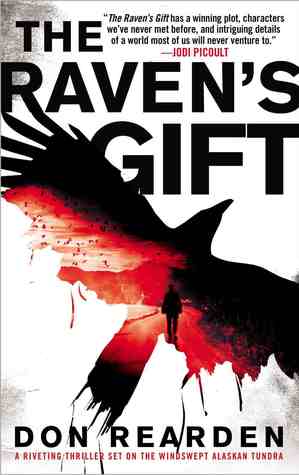
The Raven's Gift by Don Rearden. 288 pages. Published June 2013 by Pintail. (First published in 2011 in Canada).
Confession: I "know" Don through twitter, he is an Anchorage resident and University of Anchorage-Alaska professor. I'd been meaning to read his book for a while, but sped it up after he agreed to participate in an Alaska Book Week event at the library.
John Morgan and his wife Anna know life will be hard as teachers in a primarily Yup'ik village in rural Alaska. That challenge turns to a nightmare when a plague hits and much of the population is wiped out. Faced with trying to hike his way over thousands of miles of tundra, John finds unlikely alliances and horrors waiting among the other survivors.
My husband is Yup'ik and travels to rural Alaska for work and family reasons. He didn't read the book before the author event, but loved hearing Rearden talk and started it the next day. Since then he has been enthusiastically recommending this book to everyone (a few friends, his coworkers) and lending out our copy left and right. He knows far more about rural Alaska than me and says Rearden has it spot-on.
The thing about rural in Alaska is they mean no roads. The only way in is often a boat, snow machine, or usually a small plane. There are no easy fixes or quick resources when trouble happens. It is one of the most isolated environments on Earth. And that alone is scary.
There is a lot of historical groundwork for the devastating consequences of a plague/illness/flu epidemic in remote Alaska. Locals still refer to "The Great Death", a flu epidemic in the early 20th century. It is absolutely one of the most realistic horror books I have read in a long time.
Rearden does an excellent job of portraying the isolation and fear of any survival situation and compounding that with the extremes of the arctic tundra. His narrative switches between three timelines, weaves in traditional Yup'ik stories, and incredibly portrays a place that seems surreal to the modern city dweller. The book was descriptive enough that I felt cold reading it.
And it's creepy. So creepy. I can't tell you about the creepy parts without ruining it for you. But I will say what I expected to be the HORROR was not the scare that I had by the end of the book.
If you want a good survival story, a creepy look at an all too realistic situation, or a really good portrayal of rural Alaska, I urge you to pick up this book.
The Never List by Koethi Zan. 303 pages. Published July 2013 by Pamela Dorman Books.
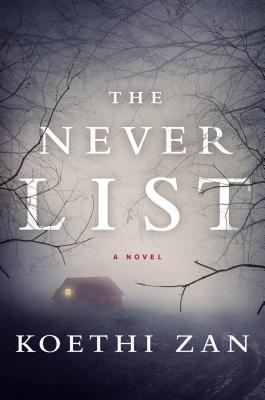
Here we have a "pulled from the headlines" style thriller. After years of keeping a "never list" of actions to be avoided to stay safe, Sarah and Jennifer think they have beaten the odds. But one night they get into a car and wake up in a basement. For the next three years they and other young female captives are sadistically tortured in their basement prison. But it is when they escape and must deal with the consequences of those years and their choices, that contain the true horror.
There are far far far too many of these types of cases in the news. 2010's Room was another novelization of such a horrible case.
Here the story is told in flashbacks between an adult "free" Sarah and the scared college girl in the basement. The horror here lies in not a monster or zombie lurking in the shadows, but within the hearts of man. (And yes I'm humming the old Shadow theme song while I type that cliche).
I don't normally go for thrillers or crime novels, but this one appealed to me because of the psychological aspects of the story. Much of it is about the breaking down, and rebuilding of Sarah's mind. Overall, captivating page turner and fairly well written. There were a few characters I wish I had more development on, but ultimately it was quite a good book.
Escape from Camp 14: One Man's Remarkable Odyssey from North Korea to Freedom in the West by Blaine Harden.
Published March 2012 by Viking. 205 pages. (I listened to an audio version.)
Unlike my other choices for Halloween, this book is non-fiction. Sometimes the scariest things in this world are all too real. Shin Dong-hyuk was the first North Korean to escape from a "total control zone" (prison/work camp) to life in the West. He was born and raised in the prison camp under the Kim policy of punishing the families of offenders to the "third generation". Because his father's brothers had escaped during the Korean war, he and his family were destined to always live in prison. Shin was himself the product of a "reward marriage" arranged by the guards between his parents.
Most of us can not fathom what it is to grow up in an environment without even knowing the meaning of love, to view your mother only as competition for food, your father and brother as virtual strangers.
The view into a closed world offered here is both horrifying and honest. Shin opens up about some of his own actions aware that he might be judged harshly.
One interesting thing I learned, South Koreans are in favor of unification but not right now. Unification with North Korea would be very costly and the extremely robust South Korean economy would bear the brunt of it. Projections show that it would raise taxes for 60 years. (In comparison that is like if we were still paying off my grandfather's fight in WWII when I graduated college.)
If you want a true life horror this Halloween, it doesn't get scarier then life in a North Korean prison camp.
Showing posts with label review. Show all posts
Thursday, October 31, 2013
Saturday, September 07, 2013
Review - The Returned
Please don't let the fact that this is published by Harlequin dissuade you. There's nary a heaving breast or throbbing member to be found. Instead you have some very well written speculative fiction.
The Returned by Jason Mott. Published by Harlequin, August 27th, 2013. 352 pages.
Bottom Line: Not a flawless book, but a very good book. Focusing more on human nature and relationships than supernatural, it is a nonetheless eerie book that succeeds in getting under the skin of the reader. Recommended for purchase by most librarians. Will appeal to fans of China Mieville and Carlos Ruiz Zafon.
All around the world, the dead are returning. They're not coming back as zombies or ghosts or vampires (not that type of novel), they're just coming back. Thousands of miles from home, with no memories of the afterlife, just returning in much the same condition they were when they died. This presents problems when, for example, a group of Nazi soldiers comes back in a small town in rural America. At first the Bureau tries to reunite the returned with their families, but not every returned is welcomed back. They bring out a lot of complicated feelings. And the problems grow as the numbers of returned grow.
At the heart of the novel is the small town where the Hargraves live. They face complicated feelings when their young son, drowned nearly 50 years earlier, is returned. And then their town is taken over for a detention center for the returned. As tensions burn between the returned, the soldiers, and the "True Living" townsfolk, no one is ready for the chaos.
The concept is fascinating. The dead returning as almost but not quite living with no explanation. The reader receives no more explanation than did the people of the novel allowing us to share in the mystery and frustration.
The setting is incredible. You see this small town, a bit run down by the economy, filled with people who aren't good or bad but just people, and you feel like you could live there. Or that you do. Because it is every small town, but it is also its own place.
Characterization was fantastic. Even the "villains" are fully developed complex characters. No one was predictable. Some of the characters I thought I knew the best managed to surprise me right at the end, but surprise me in a way that was consistent with their character and shed light on every previous action. In other words, some of the best characterizations I have ever felt.
Great premise. Fantastic setting. Incredible characterization. Mediocre plot. The plot pacing was uneven. And that kept everything from entirely gelling together. This book was very good, but just short of great.
Between the chapters about the main characters, there are interludes written from the point of view of a returned. These are some of the most beautiful and haunting, little glimpses into the confusion. They were some of my favorite parts of this novel. I think I would really have enjoyed seeing this novel as a series of short stories set in the world dealing with this returning of the dead.
But I can't wish for a book that doesn't exist. And I did really enjoy this book. I do recommend it. It's speculative fiction without being hardcore, returning from the dead without being zombies, paranormal but not frightening, it does what great literature does, it makes us look within ourselves to ask how we and our neighbors would handle a situation.
The Returned by Jason Mott. Published by Harlequin, August 27th, 2013. 352 pages.
Bottom Line: Not a flawless book, but a very good book. Focusing more on human nature and relationships than supernatural, it is a nonetheless eerie book that succeeds in getting under the skin of the reader. Recommended for purchase by most librarians. Will appeal to fans of China Mieville and Carlos Ruiz Zafon.
All around the world, the dead are returning. They're not coming back as zombies or ghosts or vampires (not that type of novel), they're just coming back. Thousands of miles from home, with no memories of the afterlife, just returning in much the same condition they were when they died. This presents problems when, for example, a group of Nazi soldiers comes back in a small town in rural America. At first the Bureau tries to reunite the returned with their families, but not every returned is welcomed back. They bring out a lot of complicated feelings. And the problems grow as the numbers of returned grow.
At the heart of the novel is the small town where the Hargraves live. They face complicated feelings when their young son, drowned nearly 50 years earlier, is returned. And then their town is taken over for a detention center for the returned. As tensions burn between the returned, the soldiers, and the "True Living" townsfolk, no one is ready for the chaos.
The concept is fascinating. The dead returning as almost but not quite living with no explanation. The reader receives no more explanation than did the people of the novel allowing us to share in the mystery and frustration.
The setting is incredible. You see this small town, a bit run down by the economy, filled with people who aren't good or bad but just people, and you feel like you could live there. Or that you do. Because it is every small town, but it is also its own place.
Characterization was fantastic. Even the "villains" are fully developed complex characters. No one was predictable. Some of the characters I thought I knew the best managed to surprise me right at the end, but surprise me in a way that was consistent with their character and shed light on every previous action. In other words, some of the best characterizations I have ever felt.
Great premise. Fantastic setting. Incredible characterization. Mediocre plot. The plot pacing was uneven. And that kept everything from entirely gelling together. This book was very good, but just short of great.
Between the chapters about the main characters, there are interludes written from the point of view of a returned. These are some of the most beautiful and haunting, little glimpses into the confusion. They were some of my favorite parts of this novel. I think I would really have enjoyed seeing this novel as a series of short stories set in the world dealing with this returning of the dead.
But I can't wish for a book that doesn't exist. And I did really enjoy this book. I do recommend it. It's speculative fiction without being hardcore, returning from the dead without being zombies, paranormal but not frightening, it does what great literature does, it makes us look within ourselves to ask how we and our neighbors would handle a situation.
Friday, August 16, 2013
Review - The Wicked Girls
Published first in the UK (last year) and in the United States this summer, I got an advanced copy of the US edition Wicked Girls from the Early Word program. This is not a book I would have normally picked up, but I could not put it down. Perhaps I like mysteries/thrillers more than I thought I did or perhaps this book is just THAT GOOD.
The Wicked Girls by Alex Marwood. 378 pages. UK version published by Sphere in 2012, US version published July 30, 2013 by Penguin.
Bottom Line: Recommended for most all public libraries. Great summer read. Would appeal either to mystery fans of sociological issues fans (ie Jodi Piccoult).
Two 11 year-old girls suffering from different and very similar lives of neglect meet for one summer day. At the end of that day, they are murderers. Their subsequent prosecution, imprisonment, and release under a protection program that changes their identities all come to a head 25 years later. Kristy is a journalist covering a serial killer and Amber is a cleaning supervisor who has found one of the victims. Switching between the current series of murders and their fears for the lives they've established should their secret be revealed.
When a child commits a terrible crime, there is a lot of speculation in the media on why (bad parenting, violent video games, natural sociopath, pick your disorder du jour). This book can not and does not try to give an overarching reason. Instead it tells a very plausible story of two girls, one awful day, and the adults they become.
At no point is this an apologetic tale, the horror of what happened and the culpability of all involved is never sugarcoated. However for those of you like your thriller with a healthy dose of psychological introspection, Marwood has written a fantastic tale for you.
Setting: an economically depressed, working class town on a cold rainy coast in Britain. It is perfectly described. Have you read The Working Poor or Nickel and Dimed? What I love here, beyond the obvious thriller/mystery, was the contrasts of the recession on Kristy (solidly middle class but struggling with her husband out of work) and Amber and her working class/minimum wage colleagues. Fantastically done, insightful societal portraits. Ultimately, that is why this appeals so much more to me than your average mystery. The vivid characters, detailed setting, and multifaceted look at a society's larger issues are incredibly compelling. More than the mystery, that keeps the reader turning the pages and thinking about it long after you have finished reading.
Oh yeah and the mystery is good and fast paced. You will want to know what precisely happened on the day when they were children and who is killing people now. I had called out the red herring and the real murderer pretty early though. But it wasn't enough to stop me from reading the rest of this book as it usually does with mysteries. Seeing how Marwood would get us to the end kept me reading. Overall this is just a fantastic book.
The Wicked Girls by Alex Marwood. 378 pages. UK version published by Sphere in 2012, US version published July 30, 2013 by Penguin.
Bottom Line: Recommended for most all public libraries. Great summer read. Would appeal either to mystery fans of sociological issues fans (ie Jodi Piccoult).
Two 11 year-old girls suffering from different and very similar lives of neglect meet for one summer day. At the end of that day, they are murderers. Their subsequent prosecution, imprisonment, and release under a protection program that changes their identities all come to a head 25 years later. Kristy is a journalist covering a serial killer and Amber is a cleaning supervisor who has found one of the victims. Switching between the current series of murders and their fears for the lives they've established should their secret be revealed.
When a child commits a terrible crime, there is a lot of speculation in the media on why (bad parenting, violent video games, natural sociopath, pick your disorder du jour). This book can not and does not try to give an overarching reason. Instead it tells a very plausible story of two girls, one awful day, and the adults they become.
At no point is this an apologetic tale, the horror of what happened and the culpability of all involved is never sugarcoated. However for those of you like your thriller with a healthy dose of psychological introspection, Marwood has written a fantastic tale for you.
Setting: an economically depressed, working class town on a cold rainy coast in Britain. It is perfectly described. Have you read The Working Poor or Nickel and Dimed? What I love here, beyond the obvious thriller/mystery, was the contrasts of the recession on Kristy (solidly middle class but struggling with her husband out of work) and Amber and her working class/minimum wage colleagues. Fantastically done, insightful societal portraits. Ultimately, that is why this appeals so much more to me than your average mystery. The vivid characters, detailed setting, and multifaceted look at a society's larger issues are incredibly compelling. More than the mystery, that keeps the reader turning the pages and thinking about it long after you have finished reading.
Oh yeah and the mystery is good and fast paced. You will want to know what precisely happened on the day when they were children and who is killing people now. I had called out the red herring and the real murderer pretty early though. But it wasn't enough to stop me from reading the rest of this book as it usually does with mysteries. Seeing how Marwood would get us to the end kept me reading. Overall this is just a fantastic book.
Friday, August 02, 2013
Review - Life After Life
Sometimes I like to pair books with audiobooks the way other people pair wines with meals. I paired this with Cloud Atlas by David Mitchell (on audio) and it was a lovely matching. Reincarnation that isn't quite reincarnation in both cases. Beautiful combination.
Life After Life by Kate Atkinson. 529 pages. Published in April 2013 by Reagan Arthur Books.
Bottom Line: I can not say enough good things about this book. It's a wonderful character based relationship drama, beautifully written with a fascinating plot device. Will appeal to fans of Kate Morton. Good choice for book clubs. Recommended for all libraries.
In 1910 Ursula Todd is born and dies due to a cord wrapped around her neck. But then again on that same night she is born and this time the doctor makes it to her house and she lives. So it goes throughout her life, she dies and the next time manages to change events. Vague memories of previous lives haunt her with a constant since of deja vu. But with a life that spans two wars, a depression, and a flu epidemic can she use this to change more than just her own fate and that of the ones she loves?
This is a seriously fantastic concept. I've never seen reincarnation approached in quite this way before (the closest perhaps is The Butterfly Effect but this is much better done). The reliving of lives leaves Ursula able to make different choices as she grows older and as such affect not only if she lives, but those around her. Of course her constant since of deja vu leads to its own problems.
The language Atkinson uses is beautiful, it is as repetitive and circular as is Ursula's life resulting in a melancholy, ethereal quality. Such revisits and repeats of scenes as we relive Ursula's life could be tiresome and redundant, but they aren't. With each return to a scene it is framed slightly differently and we learn something new about the characters. It's brilliant.
The setting is ideal for such a plot device. A girl who watches her father fight in one world war, the entire world set back by a flu epidemic, and then her brothers and friends fight in another world war is uniquely poised to do something if she has a pre-knowledge of history. England of the countryside and London are starkly rendered. I felt as cold and bone-weary as Ursula did as she searched bombed buildings for survivors during the Blitz.
And let's talk about the ending. (No spoilers, promise!) When you have a main character who constantly gets to relive her own life, it would be possible to never end your story and almost impossible to really end it. While everyone of the 529 pages are worth it, I did wonder how she would end it. And how she did still leaves you with a lot of questions, but also a lot of satisfaction. I chose to believe that each time she restarted and changed something she created a new parallel universe, but I read too much scifi. And thus we ended in the universe that the author wanted us to live in.
Please note this book is not scifi by any stretch of the imagination. I'm sure it gets classified as "women's lit" but I hate that term. I'm going with literary fiction because of how wonderfully written and carefully constructed it is. Just go read it.
Life After Life by Kate Atkinson. 529 pages. Published in April 2013 by Reagan Arthur Books.
Bottom Line: I can not say enough good things about this book. It's a wonderful character based relationship drama, beautifully written with a fascinating plot device. Will appeal to fans of Kate Morton. Good choice for book clubs. Recommended for all libraries.
In 1910 Ursula Todd is born and dies due to a cord wrapped around her neck. But then again on that same night she is born and this time the doctor makes it to her house and she lives. So it goes throughout her life, she dies and the next time manages to change events. Vague memories of previous lives haunt her with a constant since of deja vu. But with a life that spans two wars, a depression, and a flu epidemic can she use this to change more than just her own fate and that of the ones she loves?
This is a seriously fantastic concept. I've never seen reincarnation approached in quite this way before (the closest perhaps is The Butterfly Effect but this is much better done). The reliving of lives leaves Ursula able to make different choices as she grows older and as such affect not only if she lives, but those around her. Of course her constant since of deja vu leads to its own problems.
The language Atkinson uses is beautiful, it is as repetitive and circular as is Ursula's life resulting in a melancholy, ethereal quality. Such revisits and repeats of scenes as we relive Ursula's life could be tiresome and redundant, but they aren't. With each return to a scene it is framed slightly differently and we learn something new about the characters. It's brilliant.
The setting is ideal for such a plot device. A girl who watches her father fight in one world war, the entire world set back by a flu epidemic, and then her brothers and friends fight in another world war is uniquely poised to do something if she has a pre-knowledge of history. England of the countryside and London are starkly rendered. I felt as cold and bone-weary as Ursula did as she searched bombed buildings for survivors during the Blitz.
And let's talk about the ending. (No spoilers, promise!) When you have a main character who constantly gets to relive her own life, it would be possible to never end your story and almost impossible to really end it. While everyone of the 529 pages are worth it, I did wonder how she would end it. And how she did still leaves you with a lot of questions, but also a lot of satisfaction. I chose to believe that each time she restarted and changed something she created a new parallel universe, but I read too much scifi. And thus we ended in the universe that the author wanted us to live in.
Please note this book is not scifi by any stretch of the imagination. I'm sure it gets classified as "women's lit" but I hate that term. I'm going with literary fiction because of how wonderfully written and carefully constructed it is. Just go read it.
Saturday, July 27, 2013
Review - The Light in the Ruins
Having read a plethora of books about the English, French, American, and German experience in WWII, it was a surprise to me to realize how little I knew about the Italian side of things. Enter The Light in the Ruins which is set alternatively at the end of the Italian fighting in 1943 and over a decate later in 1955 when the country is trying to rebuild.
The Light in the Ruins by Chris Bohjalian. Published July 2013 by Doubleday. 309 pages. I received an advanced ebook copy for the purposes of review.
Bottom Line: An enjoyable summer read that nicely blends elements of relationship based fiction, historical fiction, and murder mystery genres for a lot of cross appeal. Recommended to medium sized and above public libraries. Will appeal to fans of everything from Jodi Picoult to Iris Johansen
In 1955 Italy a serial killer is tracking down and murdering the members of the once noble Rosati family. As the investigation proceeds, the detective realizes it might have something to do with the final days of the German occupation of Italy and her own tortured past as a partisan Italian freedom fighter. Jumping between 1943 and post-war Italy, you learn the story of the Rosati and their villa on top of ancient ruins, Germans, Nazis, partisan rebels, and the impossible choices war forces upon us all.
What if you were 18 and there were no men your age around due to war? No parties? No socialization opportunities? Would you fall in love with a handsome German, even a Nazi soldier? What if you were 18 and you lost your entire family to the Nazis? Could you go back to your "normal" life or would you join us with the rebel factions fighting for freedom? What if that fight meant innocent people would die?
Different women, different choices. And at the heart of the wonderful novel is the choices we make when life is impossible. I found it to be an authentic and heartfelt novel.
The characters, especially that of Cristina Rosati and Serafina Bettini (the partisan/detective) were really well developed. (Insert obligatory note wherein I'm surprised at how well a male author writes female characters.) The supporting characters were also well flushed out. At times only hints of characters and stories were given, and the glimpse of a larger story added to the authenticity of the setting/characters--even if it somewhat frustrated me, but I'm a completionist.
The setting wasn't enough there for me. This book focused so much on character development that I felt the setting was somewhat lacking. There were wonderful descriptions of the villa in the 40s, the ruins, and the countryside, but not much of Italy in 1955. I had a lot of questions. How was the recovery going? Economics? Are there still bomb shattered buildings around or has it mostly been rebuilt? I got much less of a sense of Italy a decade past war and that is too bad because I would have been interested in it. There are a few hints about which tourists have the money to travel, some passing comments about what people were doing during the war and how that affects them now, but it was scarce compared to the war time descriptions. Probably the weakest part of the book.
And on the plot? The plot was page turning (to use a cliche). The back and forth between time frames, while often overused, worked to build suspense and gradually reveal the next necessary details. I'm more ambivalent about the two pages in between each chapter that were told in first person from the point of view of the serial killer. It didn't do much to reveal his identity or add to his character development once his identity was revealed. And it didn't add to the overall tension of the book. Those interludes were just there. Perhaps what the author was trying to do with them could have (or actually was) done by the rest of the text and that is why they felt superfluous.
In general, I enjoyed this book. Great choice for a summer read and it quite nicely bridges the line between historical fiction/women's literature and murder mystery. I didn't think of it as a murder mystery, but it would appeal to mystery fans.
The Light in the Ruins by Chris Bohjalian. Published July 2013 by Doubleday. 309 pages. I received an advanced ebook copy for the purposes of review.
Bottom Line: An enjoyable summer read that nicely blends elements of relationship based fiction, historical fiction, and murder mystery genres for a lot of cross appeal. Recommended to medium sized and above public libraries. Will appeal to fans of everything from Jodi Picoult to Iris Johansen
In 1955 Italy a serial killer is tracking down and murdering the members of the once noble Rosati family. As the investigation proceeds, the detective realizes it might have something to do with the final days of the German occupation of Italy and her own tortured past as a partisan Italian freedom fighter. Jumping between 1943 and post-war Italy, you learn the story of the Rosati and their villa on top of ancient ruins, Germans, Nazis, partisan rebels, and the impossible choices war forces upon us all.
What if you were 18 and there were no men your age around due to war? No parties? No socialization opportunities? Would you fall in love with a handsome German, even a Nazi soldier? What if you were 18 and you lost your entire family to the Nazis? Could you go back to your "normal" life or would you join us with the rebel factions fighting for freedom? What if that fight meant innocent people would die?
Different women, different choices. And at the heart of the wonderful novel is the choices we make when life is impossible. I found it to be an authentic and heartfelt novel.
The characters, especially that of Cristina Rosati and Serafina Bettini (the partisan/detective) were really well developed. (Insert obligatory note wherein I'm surprised at how well a male author writes female characters.) The supporting characters were also well flushed out. At times only hints of characters and stories were given, and the glimpse of a larger story added to the authenticity of the setting/characters--even if it somewhat frustrated me, but I'm a completionist.
The setting wasn't enough there for me. This book focused so much on character development that I felt the setting was somewhat lacking. There were wonderful descriptions of the villa in the 40s, the ruins, and the countryside, but not much of Italy in 1955. I had a lot of questions. How was the recovery going? Economics? Are there still bomb shattered buildings around or has it mostly been rebuilt? I got much less of a sense of Italy a decade past war and that is too bad because I would have been interested in it. There are a few hints about which tourists have the money to travel, some passing comments about what people were doing during the war and how that affects them now, but it was scarce compared to the war time descriptions. Probably the weakest part of the book.
And on the plot? The plot was page turning (to use a cliche). The back and forth between time frames, while often overused, worked to build suspense and gradually reveal the next necessary details. I'm more ambivalent about the two pages in between each chapter that were told in first person from the point of view of the serial killer. It didn't do much to reveal his identity or add to his character development once his identity was revealed. And it didn't add to the overall tension of the book. Those interludes were just there. Perhaps what the author was trying to do with them could have (or actually was) done by the rest of the text and that is why they felt superfluous.
In general, I enjoyed this book. Great choice for a summer read and it quite nicely bridges the line between historical fiction/women's literature and murder mystery. I didn't think of it as a murder mystery, but it would appeal to mystery fans.
Friday, July 12, 2013
Urban Fiction (Street Lit) Thoughts and a Review
Recently I used a portion of some grant funds to increase the size of our urban fiction collection. It circulates well here and we get a lot of requests for it. There are some core lists and resources for ordering urban/street lit, but not a lot. And those that do exist are often out of date. I relied heavily on Amazon best seller lists (and the "customer who bought this item also bought") feature.
This week as I pulled books that were no longer new from the new books into the general collection, I decided to read an urban lit book. The last one I read was The Coldest Winter Ever by Sister Souljah. That bestselling book is one of the best known of the genre. I suppose it would be like someone reading Outlander by Diana Gabaldon and declaring themselves done with romance novels. In other words, as an urban librarian, it was time for me to revisit the genre.
Let's talk about urban lit or street lit. Both terms are used frequently. I prefer the term street lit, but always seem to find myself typing urban lit. There are many ways to be urban and the lifestyle reflected in this books is only one choice, hence I prefer street lit. Some of my patrons ask for the "black books" and they don't mean Alice Walker and Toni Morrison. That bugs me and I'd rather not think too hard about it. So Street Lit it is!
For me there are several barriers to street lit. I'm not the intended audience and I know that. However exaggerated and extreme the storylines are, there is some basis in truth and that truth makes me uncomfortable. I have worked with urban and economically disadvantaged populations for over a decade. I comprehend the challenges they face, but I don't understand. Though I read all the articles, all the studies, talk to people, work with families, and even do home visits, I still go home to a nice place to live and a pantry full of food. I don't go home to a government subsidized apartment wondering how to make food stamps stretch through the end of the month while I divert my minimum wage paycheck to gas to get to that job. Comprehending is not knowing and I've never lived that life.
Reading urban lit is an uncomfortable experience as I am forced to confront the privilege afforded to me by my skin color, my education, my socioeconomic class, and my family. I am blessed to have a safety net a mile wide. If I lost my job, my savings, etc., I would not be forced, as the main character in this novel, to prostitute myself or sleep in my car. It's hard for me to evaluate a character's choices (and isn't that why we read literature to evaluate their choices and think what we would do) when her set of circumstances are so widely different than my own. My current book filled with upper and middle class characters making hard choices in Italy during WWII is some how more relatable than that of a lower income urban character in my own country and time. There is something wrong with that or perhaps something wrong with me. As I said, I've worked within those communities, but I've never lived within them. This is why the Vista program (the branch of Americorps that fights poverty) pays their volunteers at the poverty line so they can begin to understand the people they are trying to help.
And of course the most common criticism of street lit is the glorification of guns, drugs, and gang life. That's there. Absolutely. And I haven't read all of street lit, two books is hardly a statistically valid sampling, but the two I have read have had definite moral warnings against all of the vices they spent the first 2/3rds of their books glorifying. A bit of a mixed message or a very classic morality story (I did these things, they were fun, but then I paid for it).
Enough general blathering and on to the review.
Shattered by Kia DuPree. Published in 2012 by Grand Central Publishing. 384 pages.
Bottom Line: Recommended for a library with a street lit collection. Strong female protagonist and likely to appeal to women readers. Definitely will appeal to fans of Sister Souljah. (I don't know enough of this genre to know more of the cross appeal.)
When Kiki's partially deaf mother loses custody of her children, and Kiki enters the foster care system her life begins to crumble. She runs away from the foster home and into the arms of a pedophile, abuse, and prostitution. Even as an adult reunited with her family, those patterns continue for her and her family. As she struggles against a life of pimps, boyfriends, drugs, gangs, and violence, she makes hard choices about her future.
Most obvious thing about this book: it is written in vernacular. To me the grammar feels wrong and it is grating. It is an intentional choice. To the credit of the author, the character and plot was enough to keep me engaged through the first twenty pages. After that the speech patterns and grammatical choices felt natural and organic to those characters and that setting. As such they faded into the background and allowed me to enjoy the book. This is a great triumph for the author since the first 20 pages I was itching to grab a red pen.
Please note I don't have perfect grammar either. So I definitely should not be judging harshly. It is just that this dialect of English is different similar enough to my own that instead of seeing it as a different dialect, I see it as a series of mistakes. That the author brought me past that surprised no one more than me.
Beyond all the general issues mentioned above, my biggest problem with this book is that it is "abuse titillation". "Abuse titillation" is the term I use to refer to the joy we all take in reading of gross misfortune endured by others. This primarily seems to be a female trait. Elementary school girls read about the Holocaust, middle school girls read A Child Called It, high school girls read V.C. Andrews, and adult women read true crime. Even Law & Order had a SVU spinoff just for their "special victims unit", capitalizing on this country's fascination with crimes committed against our most vulnerable.
For me one of the hallmarks of this abuse genre is lingering descriptions of the abuse. Shattered includes rape, pedophilia, prostitution, and consensual sexual acts. All of them are described in blunt, crude terms. However the abusive acts are described in noticeably greater detail than any of the consensual (and supposedly pleasurable) sexual acts. That speaks volumes about which parts the author expects the reader to find interesting.
The last problem I want to discuss with this book is faux feminism. (Warning this paragraph and the next contain a lot of spoilers.) In theory Kiki transitions from weak scared little girl to strong woman capable of handling herself. She almost does. In the pivotal scene where the bad guy is struggling to kill her, her fingers touch the gun (almost) and just as she is about to turn and defend herself, her boyfriend kills him. As she is shaking and crying in the aftermath, she has her great emotional reveal. In one paragraph she tells him and the reader (TELLS NOT SHOWS, one of my pet peeves) just exactly how she has emotionally grown. Her boyfriend's response? He tells her she is really a "grown up girl" now. I almost threw up when I read that. It completely cheapens any emotional growth she had and minimizes her as a character/person. (Also that paragraph of emotional reveal denies the reader any joy of discovery and instead hands them a conclusion on a silver platter. I prefer a more subtle handling of catharsis wherein the reader has to do some of the work and thus shares in the emotional journey instead of being a voyeur watching a completed tableaux.)
At the conclusion, Kiki has her grand moment wherein she tells her story to a group of at risk teen girls at a charity fundraiser. It's always a nice trope for our heroine at the advanced old age of 21 to be a role model to younger teens. However I still can not find any evidence of where she is extremely admirable and strong. There's a great moment at the airport where she breaks away from her captor and that's it. She was strong to survive, and I'm not downplaying that, but only one moment of self-rescue. Even her new suburban life is courtesy of her boyfriend not due to any education or job prospects of her own. She pulls herself out of trouble but can't rise above her circumstances. I felt a little bit that without her boyfriend she would be back to part time shampoo girl and part time call girl. And that hurts the feminist in me, especially because it is subtle enough to be missed in what is trying desperately to be a strong woman story.
That's a lot of overthinking for a book review. If you want to have a street lit collection, this would be a good choice. Overall it looks better than Welfare Wifeys, but I haven't read that tome so I can not really say. It has circulated well at my library.
This week as I pulled books that were no longer new from the new books into the general collection, I decided to read an urban lit book. The last one I read was The Coldest Winter Ever by Sister Souljah. That bestselling book is one of the best known of the genre. I suppose it would be like someone reading Outlander by Diana Gabaldon and declaring themselves done with romance novels. In other words, as an urban librarian, it was time for me to revisit the genre.
Let's talk about urban lit or street lit. Both terms are used frequently. I prefer the term street lit, but always seem to find myself typing urban lit. There are many ways to be urban and the lifestyle reflected in this books is only one choice, hence I prefer street lit. Some of my patrons ask for the "black books" and they don't mean Alice Walker and Toni Morrison. That bugs me and I'd rather not think too hard about it. So Street Lit it is!
For me there are several barriers to street lit. I'm not the intended audience and I know that. However exaggerated and extreme the storylines are, there is some basis in truth and that truth makes me uncomfortable. I have worked with urban and economically disadvantaged populations for over a decade. I comprehend the challenges they face, but I don't understand. Though I read all the articles, all the studies, talk to people, work with families, and even do home visits, I still go home to a nice place to live and a pantry full of food. I don't go home to a government subsidized apartment wondering how to make food stamps stretch through the end of the month while I divert my minimum wage paycheck to gas to get to that job. Comprehending is not knowing and I've never lived that life.
Reading urban lit is an uncomfortable experience as I am forced to confront the privilege afforded to me by my skin color, my education, my socioeconomic class, and my family. I am blessed to have a safety net a mile wide. If I lost my job, my savings, etc., I would not be forced, as the main character in this novel, to prostitute myself or sleep in my car. It's hard for me to evaluate a character's choices (and isn't that why we read literature to evaluate their choices and think what we would do) when her set of circumstances are so widely different than my own. My current book filled with upper and middle class characters making hard choices in Italy during WWII is some how more relatable than that of a lower income urban character in my own country and time. There is something wrong with that or perhaps something wrong with me. As I said, I've worked within those communities, but I've never lived within them. This is why the Vista program (the branch of Americorps that fights poverty) pays their volunteers at the poverty line so they can begin to understand the people they are trying to help.
And of course the most common criticism of street lit is the glorification of guns, drugs, and gang life. That's there. Absolutely. And I haven't read all of street lit, two books is hardly a statistically valid sampling, but the two I have read have had definite moral warnings against all of the vices they spent the first 2/3rds of their books glorifying. A bit of a mixed message or a very classic morality story (I did these things, they were fun, but then I paid for it).
Enough general blathering and on to the review.
Shattered by Kia DuPree. Published in 2012 by Grand Central Publishing. 384 pages.
Bottom Line: Recommended for a library with a street lit collection. Strong female protagonist and likely to appeal to women readers. Definitely will appeal to fans of Sister Souljah. (I don't know enough of this genre to know more of the cross appeal.)
When Kiki's partially deaf mother loses custody of her children, and Kiki enters the foster care system her life begins to crumble. She runs away from the foster home and into the arms of a pedophile, abuse, and prostitution. Even as an adult reunited with her family, those patterns continue for her and her family. As she struggles against a life of pimps, boyfriends, drugs, gangs, and violence, she makes hard choices about her future.
Most obvious thing about this book: it is written in vernacular. To me the grammar feels wrong and it is grating. It is an intentional choice. To the credit of the author, the character and plot was enough to keep me engaged through the first twenty pages. After that the speech patterns and grammatical choices felt natural and organic to those characters and that setting. As such they faded into the background and allowed me to enjoy the book. This is a great triumph for the author since the first 20 pages I was itching to grab a red pen.
Please note I don't have perfect grammar either. So I definitely should not be judging harshly. It is just that this dialect of English is different similar enough to my own that instead of seeing it as a different dialect, I see it as a series of mistakes. That the author brought me past that surprised no one more than me.
Beyond all the general issues mentioned above, my biggest problem with this book is that it is "abuse titillation". "Abuse titillation" is the term I use to refer to the joy we all take in reading of gross misfortune endured by others. This primarily seems to be a female trait. Elementary school girls read about the Holocaust, middle school girls read A Child Called It, high school girls read V.C. Andrews, and adult women read true crime. Even Law & Order had a SVU spinoff just for their "special victims unit", capitalizing on this country's fascination with crimes committed against our most vulnerable.
For me one of the hallmarks of this abuse genre is lingering descriptions of the abuse. Shattered includes rape, pedophilia, prostitution, and consensual sexual acts. All of them are described in blunt, crude terms. However the abusive acts are described in noticeably greater detail than any of the consensual (and supposedly pleasurable) sexual acts. That speaks volumes about which parts the author expects the reader to find interesting.
The last problem I want to discuss with this book is faux feminism. (Warning this paragraph and the next contain a lot of spoilers.) In theory Kiki transitions from weak scared little girl to strong woman capable of handling herself. She almost does. In the pivotal scene where the bad guy is struggling to kill her, her fingers touch the gun (almost) and just as she is about to turn and defend herself, her boyfriend kills him. As she is shaking and crying in the aftermath, she has her great emotional reveal. In one paragraph she tells him and the reader (TELLS NOT SHOWS, one of my pet peeves) just exactly how she has emotionally grown. Her boyfriend's response? He tells her she is really a "grown up girl" now. I almost threw up when I read that. It completely cheapens any emotional growth she had and minimizes her as a character/person. (Also that paragraph of emotional reveal denies the reader any joy of discovery and instead hands them a conclusion on a silver platter. I prefer a more subtle handling of catharsis wherein the reader has to do some of the work and thus shares in the emotional journey instead of being a voyeur watching a completed tableaux.)
At the conclusion, Kiki has her grand moment wherein she tells her story to a group of at risk teen girls at a charity fundraiser. It's always a nice trope for our heroine at the advanced old age of 21 to be a role model to younger teens. However I still can not find any evidence of where she is extremely admirable and strong. There's a great moment at the airport where she breaks away from her captor and that's it. She was strong to survive, and I'm not downplaying that, but only one moment of self-rescue. Even her new suburban life is courtesy of her boyfriend not due to any education or job prospects of her own. She pulls herself out of trouble but can't rise above her circumstances. I felt a little bit that without her boyfriend she would be back to part time shampoo girl and part time call girl. And that hurts the feminist in me, especially because it is subtle enough to be missed in what is trying desperately to be a strong woman story.
That's a lot of overthinking for a book review. If you want to have a street lit collection, this would be a good choice. Overall it looks better than Welfare Wifeys, but I haven't read that tome so I can not really say. It has circulated well at my library.
Saturday, June 01, 2013
Review - Royal Mistress
I suppose it is about time that I posted a negative review if only to prove that I am a real person and not a publishing company puppet. I received an advanced copy of this book, out now in paperback.
The Royal Mistress by Anne Easter Smith. 400 pages. Published by Touchstone in May 2013.
Thing is, I really wanted to like this book. It has a lot of elements of books I enjoy: English royalty, fascinating historical period, lots of descriptions of clothing, outsider perspective (you don't get much more outsider than a commoner mistress), but it never really coalesced for me.
Jane Shore is the "favorite mistress" of King Edward IV, he of the Wars of the Roses. She rose from being a commoner, daughter of a merchant (portrayed here as running a fabric shop) as she gained the attention and affection of a string of very important, very noble and sometimes royal men. It's a great historical story, portrayed often because of the scandal and romance.
I expected to really enjoy this book, at the least to find it a light and fun summer read (ala Philippa Gregory), but the writing was still and awkward. I'd find myself drawn out of the story by the choppy sentences, awkward dialog, and overly stilted narration.
Perhaps a greater crime was that ancient trespass of "telling not showing". Over and over again we are told a characters motivation, back story, experiences, etc., but only rarely are we shown those elements and allowed to draw our own conclusions.
For example, early on in the story, Jane Shore is being berated/punished by her father and wonders at her mother not intervening for her. As she storms off there is a throwaway line to the effect of Jane not having seen the myriad ways in which her mother has been beaten down so far that she will not help her children. That's a good backstory and motivation; it's an important part of her family dynamic and the main character's personality. And it could have been handled better/more subtly/more fully then one throwaway line that gives an easy answer with no work for the reader to do.
Between the writing and the showing not telling I just kept wondering away from this book. After 5 weeks, I am going to admit, that I am not going to finish this book. I made it halfway through and have no desire to finish it.
This might just be me. Since I didn't finish the book, you are free to take my entire review with a grain of salt. The reviews so far on Goodreads are positive, but Amazon has more mixed reviews. Libraries with large paperback collections and/or previous books by this author should probably pick this book up, but I will pass on recommending it to my friends and patrons.
The Royal Mistress by Anne Easter Smith. 400 pages. Published by Touchstone in May 2013.
Thing is, I really wanted to like this book. It has a lot of elements of books I enjoy: English royalty, fascinating historical period, lots of descriptions of clothing, outsider perspective (you don't get much more outsider than a commoner mistress), but it never really coalesced for me.
Jane Shore is the "favorite mistress" of King Edward IV, he of the Wars of the Roses. She rose from being a commoner, daughter of a merchant (portrayed here as running a fabric shop) as she gained the attention and affection of a string of very important, very noble and sometimes royal men. It's a great historical story, portrayed often because of the scandal and romance.
I expected to really enjoy this book, at the least to find it a light and fun summer read (ala Philippa Gregory), but the writing was still and awkward. I'd find myself drawn out of the story by the choppy sentences, awkward dialog, and overly stilted narration.
Perhaps a greater crime was that ancient trespass of "telling not showing". Over and over again we are told a characters motivation, back story, experiences, etc., but only rarely are we shown those elements and allowed to draw our own conclusions.
For example, early on in the story, Jane Shore is being berated/punished by her father and wonders at her mother not intervening for her. As she storms off there is a throwaway line to the effect of Jane not having seen the myriad ways in which her mother has been beaten down so far that she will not help her children. That's a good backstory and motivation; it's an important part of her family dynamic and the main character's personality. And it could have been handled better/more subtly/more fully then one throwaway line that gives an easy answer with no work for the reader to do.
Between the writing and the showing not telling I just kept wondering away from this book. After 5 weeks, I am going to admit, that I am not going to finish this book. I made it halfway through and have no desire to finish it.
This might just be me. Since I didn't finish the book, you are free to take my entire review with a grain of salt. The reviews so far on Goodreads are positive, but Amazon has more mixed reviews. Libraries with large paperback collections and/or previous books by this author should probably pick this book up, but I will pass on recommending it to my friends and patrons.
Friday, May 31, 2013
Review - The Yonahlossee Riding Camp For Girls
I received an advanced copy of this book from the Penguin Debut Authors program. This book has a lot of positive buzz, all completely justified. Kirkus (which I've always found to be the most critical and therefore most trustworthy review journal) gave it a starred review.
The Yonahlossee Riding Camp For Girls by Anton diSclafani. 400 pages, publication will be on June 4 by Riverhead Hardcover (a division of Penguin).
Bottom Line: Highly recommended. Should be picked up by all public libraries. Would be a good choice for book clubs. Reminds me a bit of The Secret Life of Bees. (Strong, female relationship centered Southern character driven drama.)
It might be the depression (1930), but wealthy 15 year-old Thea Atwell has been sheltered from that and many harsher other aspects of life in her extremely insular family. However after a family tragedy which Thea can't bear to think about or acknowledge her role in, she has been cast away from her parents and twin brother for the first time in her life.
Specifically they send her to an exclusive girls summer camp/finishing school in the Appalachian mountains. There, for the first time, she must learn to create friendships with those outside her family, and navigate the tricky waters of teenage girl social interactions. All while she denies and then comes to terms with her family situation.
Books like this are a very special type of crack to me. If you love books with A THING, a big unrevealed secret or past event that is hinted at and gradually revealed, you'll like this. The secret is not what I expected and reveals a great deal about the era, her family, and provides an interesting mirror into our own world. In other words, it is the best example of this type of book.
I was worried about this one because I don't like horses and much of this book is centered on the narrator's love of riding and horses. (I think I missed that part of the girl gene that likes horse books.) However while the horses and riding were expertly used to help portray character growth and as a window into the souls of the girls at school, it was never beat over our heads.
Characters and their growth are at the heart of this novel. For a large cast (and in a girls school none the less), I never got confused as to which girl was which. And more impressively, I never felt like any of the characters was a stock character/stereotype.
Setting and historical element was well developed. The effects of the depression, even upon the wealthy characters at the heart of the novel. It was subtly but wonderfully done to place and then hint at the irony of an enclave of wealth and exclusivity in the heart of crushingly poor Appalachia. A couple of times the author seems a bit prescient in her awareness of the lack of equality and education for women, but those rare and fleeting moments of high handedness are among the few blemishes of this otherwise extraordinary work of fiction.
Overall, I am highly recommending this book. I already passed my copy onto a friend and plan to continue to spread the word about it.
The Yonahlossee Riding Camp For Girls by Anton diSclafani. 400 pages, publication will be on June 4 by Riverhead Hardcover (a division of Penguin).
Bottom Line: Highly recommended. Should be picked up by all public libraries. Would be a good choice for book clubs. Reminds me a bit of The Secret Life of Bees. (Strong, female relationship centered Southern character driven drama.)
It might be the depression (1930), but wealthy 15 year-old Thea Atwell has been sheltered from that and many harsher other aspects of life in her extremely insular family. However after a family tragedy which Thea can't bear to think about or acknowledge her role in, she has been cast away from her parents and twin brother for the first time in her life.
Specifically they send her to an exclusive girls summer camp/finishing school in the Appalachian mountains. There, for the first time, she must learn to create friendships with those outside her family, and navigate the tricky waters of teenage girl social interactions. All while she denies and then comes to terms with her family situation.
Books like this are a very special type of crack to me. If you love books with A THING, a big unrevealed secret or past event that is hinted at and gradually revealed, you'll like this. The secret is not what I expected and reveals a great deal about the era, her family, and provides an interesting mirror into our own world. In other words, it is the best example of this type of book.
I was worried about this one because I don't like horses and much of this book is centered on the narrator's love of riding and horses. (I think I missed that part of the girl gene that likes horse books.) However while the horses and riding were expertly used to help portray character growth and as a window into the souls of the girls at school, it was never beat over our heads.
Characters and their growth are at the heart of this novel. For a large cast (and in a girls school none the less), I never got confused as to which girl was which. And more impressively, I never felt like any of the characters was a stock character/stereotype.
Setting and historical element was well developed. The effects of the depression, even upon the wealthy characters at the heart of the novel. It was subtly but wonderfully done to place and then hint at the irony of an enclave of wealth and exclusivity in the heart of crushingly poor Appalachia. A couple of times the author seems a bit prescient in her awareness of the lack of equality and education for women, but those rare and fleeting moments of high handedness are among the few blemishes of this otherwise extraordinary work of fiction.
Overall, I am highly recommending this book. I already passed my copy onto a friend and plan to continue to spread the word about it.
Friday, May 17, 2013
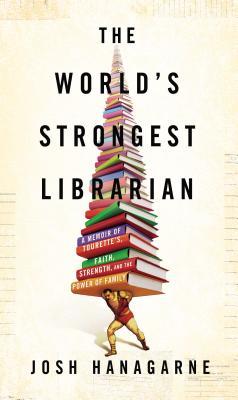
Review - The World's Strongest Librarian
I (and almost everyone there) grabbed this advanced copy at ALA Midwinter because we're all librarians and suckers for books about our kind. However I think there is plenty here to charm the non-librarian as well.
The World's Strongest Librarian by Josh Hanagrne. Published May 2013 by Gotham Books. 288 pages.
Bottom Line: Highly recommended for all libraries to own (duh) and for readers of memoir and inspirational stories and humor.
Josh Hanagarne is a librarian. He's also 6'7", weight trains, and has spent a lifetime coping with Tourette's. And for what it is worth, he was raised as a Mormon. He blogs at http://worldsstrongestlibrarian.com/.
There is a lot here, a lot of really great stuff. We meet Josh's family, get an introduction to Mormonism, watch as his Tourette's becomes more pronounced, and see him find his way through the world.
I love memoir, especially the non-celebrity kind, but a lot of it seems to dwell in the world of the sensational or horrific, exploiting the love of humans to stare at a train wreck. (Think about The Glass Castle by Jeanette Walls or Running With Scissors by Augusten Burroughs.) Those books are great and have a wonderful place on our shelves, but a book like this stands as a welcome contrast.
Even at the lowest point of this story, when the Tourette's so overcomes him that he can't go to school or hold down a job and wallows in depression, you as a reader never lose hope. And at the end, hope is the message of this story. Hope is in his family, in his attempts to use weight lifting to combat Tourette's and reclaim his life, and in his work as a librarian.
This memoir is also frank and honest, refreshingly so. Josh (I feel like since we're colleagues I can call him by his first name) discusses his faith and his doubts, his failures and successes equally without self-pity or self-aggrandizement.
And sprinkled throughout the book are what I call "crazy patrons" stories that will be familiar to any one who has ever worked in a public library. Those stories and Josh's own perspective are humorous, enough so to laugh out loud at times, and to draw in the reader so that we feel as though we are chatting with Josh over a cup of coffee.
This book is funny, heartwarming, inspiring, and such a unique perspective on the world, that I will be recommending it to several people individually.
I don't often quote from books, but this passage so summed up librarianship for me that I thought I would share it:
Those four million circulations represent people taking action. Four million times that someone got something from the library. Even if the circulation simply means that someone requested something on her computer, came in and picked it up, then left right away, she still came. She still used the service. She still took a chance on getting distracted by something else in the building.
The four million small acts lead to members of the community gathering in the same place. People who might never lay eyes on one another elsewhere. In this digital era when human contact sometimes feels quaint to me, this is significant. If libraries themselves become quaint because they house physical objects and require personal interaction at times, so be it. For that reason, I believe physical libraries always need to exist in some form.
The World's Strongest Librarian by Josh Hanagrne. Published May 2013 by Gotham Books. 288 pages.
Bottom Line: Highly recommended for all libraries to own (duh) and for readers of memoir and inspirational stories and humor.
Josh Hanagarne is a librarian. He's also 6'7", weight trains, and has spent a lifetime coping with Tourette's. And for what it is worth, he was raised as a Mormon. He blogs at http://worldsstrongestlibrarian.com/.
There is a lot here, a lot of really great stuff. We meet Josh's family, get an introduction to Mormonism, watch as his Tourette's becomes more pronounced, and see him find his way through the world.
I love memoir, especially the non-celebrity kind, but a lot of it seems to dwell in the world of the sensational or horrific, exploiting the love of humans to stare at a train wreck. (Think about The Glass Castle by Jeanette Walls or Running With Scissors by Augusten Burroughs.) Those books are great and have a wonderful place on our shelves, but a book like this stands as a welcome contrast.
Even at the lowest point of this story, when the Tourette's so overcomes him that he can't go to school or hold down a job and wallows in depression, you as a reader never lose hope. And at the end, hope is the message of this story. Hope is in his family, in his attempts to use weight lifting to combat Tourette's and reclaim his life, and in his work as a librarian.
This memoir is also frank and honest, refreshingly so. Josh (I feel like since we're colleagues I can call him by his first name) discusses his faith and his doubts, his failures and successes equally without self-pity or self-aggrandizement.
And sprinkled throughout the book are what I call "crazy patrons" stories that will be familiar to any one who has ever worked in a public library. Those stories and Josh's own perspective are humorous, enough so to laugh out loud at times, and to draw in the reader so that we feel as though we are chatting with Josh over a cup of coffee.
This book is funny, heartwarming, inspiring, and such a unique perspective on the world, that I will be recommending it to several people individually.
I don't often quote from books, but this passage so summed up librarianship for me that I thought I would share it:
Those four million circulations represent people taking action. Four million times that someone got something from the library. Even if the circulation simply means that someone requested something on her computer, came in and picked it up, then left right away, she still came. She still used the service. She still took a chance on getting distracted by something else in the building.
The four million small acts lead to members of the community gathering in the same place. People who might never lay eyes on one another elsewhere. In this digital era when human contact sometimes feels quaint to me, this is significant. If libraries themselves become quaint because they house physical objects and require personal interaction at times, so be it. For that reason, I believe physical libraries always need to exist in some form.
Friday, May 10, 2013
Review: Lexicon
Lexicon by Max Barry, to be released June 18, 2013 by Penguin Press.
Before I went to grad school for library science, I got an undergraduate degree in Linguistics. There was a brief period of time when I strongly considered becoming a linguist. It was only a few weeks long because it is hard to beat back a lifelong dream. Thrillers aren't usually my favorite genre, but I could not resist the linguistic twist.
Bottom Line: Exciting fun book, recommended for most library collections. Will appeal to fans of "smart" thrillers with a bit of a sci-fi element (in movie terms Inception and The Matrix).
In Lexicon, Barry creates a secret organization acting behind the scenes of our own world to control us all. The "poets" use linguistic control, specifically words at the root of language, to manipulate people and events. They maintain a school to train the most gifted students to be future poets, a school of extreme intelligence, competition, and unrest. It's a fascinating concept and the linguist/scifi reader in me really wanted it further fleshed out. We get the sketches of how it is used on a one to one level, but not how it could be implemented on society on a broader level.
The story begins with one normal man kidnapped at an airport parking lot by two poets fighting other poets. His story, the in-fighting, and the fall from grace of one of the most talented students are all interwoven as they all try to locate and control a word with the same power as a nuclear weapon.
Very exciting book. Perhaps I should read more action packed/thriller style books because I could hardly put this down as we raced from one confrontation to another. I would recommend this to anyone who likes smart-action with a slight sci fi bent (think Jason Bourne or Michael Crichton). My only complaint (besides wanting the concept better fleshed out) is that we switched back and forth through timelines (much of the story is told in flashbacks) quickly and I was confused once or twice.
Overall it's a great choice for a summer read, better option for travel then carrying the latest Dan Brown like everyone else. It was the first adult book I read post-Newbery, I actually read it on the plane on the way home from the conference. I happily passed along my advanced reader copy (picked up in January at ALA Midwinter) to several people who all enjoyed it.
Before I went to grad school for library science, I got an undergraduate degree in Linguistics. There was a brief period of time when I strongly considered becoming a linguist. It was only a few weeks long because it is hard to beat back a lifelong dream. Thrillers aren't usually my favorite genre, but I could not resist the linguistic twist.
Bottom Line: Exciting fun book, recommended for most library collections. Will appeal to fans of "smart" thrillers with a bit of a sci-fi element (in movie terms Inception and The Matrix).
In Lexicon, Barry creates a secret organization acting behind the scenes of our own world to control us all. The "poets" use linguistic control, specifically words at the root of language, to manipulate people and events. They maintain a school to train the most gifted students to be future poets, a school of extreme intelligence, competition, and unrest. It's a fascinating concept and the linguist/scifi reader in me really wanted it further fleshed out. We get the sketches of how it is used on a one to one level, but not how it could be implemented on society on a broader level.
The story begins with one normal man kidnapped at an airport parking lot by two poets fighting other poets. His story, the in-fighting, and the fall from grace of one of the most talented students are all interwoven as they all try to locate and control a word with the same power as a nuclear weapon.
Very exciting book. Perhaps I should read more action packed/thriller style books because I could hardly put this down as we raced from one confrontation to another. I would recommend this to anyone who likes smart-action with a slight sci fi bent (think Jason Bourne or Michael Crichton). My only complaint (besides wanting the concept better fleshed out) is that we switched back and forth through timelines (much of the story is told in flashbacks) quickly and I was confused once or twice.
Overall it's a great choice for a summer read, better option for travel then carrying the latest Dan Brown like everyone else. It was the first adult book I read post-Newbery, I actually read it on the plane on the way home from the conference. I happily passed along my advanced reader copy (picked up in January at ALA Midwinter) to several people who all enjoyed it.
Friday, May 03, 2013
Review - The Caged Graves
The Caged Graves by Diane K. Salerni. Publishes May 14, 2013 by Clarion books. Appropriate for 7th grade (age 12) and up. 336 pages.
It's 1867 and Verity Boone (what a great name!) is coming home to Catawissa, Pennsylvania after spending most of her childhood back East being raised by relatives following the death of her mother. She is looking forward to reconnecting with her father and getting to know the fiance whose proposal she accepted after a courtship conducted entirely by mail. (Yes teenagers that is a thing that used to happen. It's the 19th century precursor to online dating.)
However when she gets there, all is not as expected. She finds it hard to reconnect to her father and even harder to reconcile the charming man in the letters with the somewhat stiff young farmer she meets. A handsome young doctor tries to claim her attention. Amidst all this relationship drama, she finds that the graves of her mother and aunt are outside the consecrated church yard and encased in iron cages. Trying to sort out rumor, malicious townsfolk, conflicting feelings, and hints of a long lost treasure will make her return more than a little problematic.
Bottom Line: Highly recommended for all libraries. Will appeal to teens who enjoyed last year's The Wicked and the Just or historical fiction/light romance in general.
This is one of those books that I stayed up late to finish. The caged graves aren't about what you think they're about. The rival suitors aren't what you think either though I am happy to say I got that one right. Salerni perfectly manages those hints that could lead you on multiple paths without so littering the ground with red herrings that you get disgusted with the entire effort. It's a beautifully crafted plot.
Post-Civil War life in America is richly portrayed here. The book is sprinkled with lovely little details (such as the lingering resentment of some townspeople over the richer citizens who were able to pay another to go to war in their place) that bring the time to life without drowning you in the author's research.
Sometimes in books, especially those aimed at teen girls, if there is a love triangle (and isn't there always?), the only characters that are fully developed are the triangular three. That is not the case here. There are complexities and surprising depth to many of the secondary characters. And that is what distinguishes this from being a good book into a great book.
I received a free ebook advanced copy of this title for the purposes of review.
It's 1867 and Verity Boone (what a great name!) is coming home to Catawissa, Pennsylvania after spending most of her childhood back East being raised by relatives following the death of her mother. She is looking forward to reconnecting with her father and getting to know the fiance whose proposal she accepted after a courtship conducted entirely by mail. (Yes teenagers that is a thing that used to happen. It's the 19th century precursor to online dating.)
However when she gets there, all is not as expected. She finds it hard to reconnect to her father and even harder to reconcile the charming man in the letters with the somewhat stiff young farmer she meets. A handsome young doctor tries to claim her attention. Amidst all this relationship drama, she finds that the graves of her mother and aunt are outside the consecrated church yard and encased in iron cages. Trying to sort out rumor, malicious townsfolk, conflicting feelings, and hints of a long lost treasure will make her return more than a little problematic.
Bottom Line: Highly recommended for all libraries. Will appeal to teens who enjoyed last year's The Wicked and the Just or historical fiction/light romance in general.
This is one of those books that I stayed up late to finish. The caged graves aren't about what you think they're about. The rival suitors aren't what you think either though I am happy to say I got that one right. Salerni perfectly manages those hints that could lead you on multiple paths without so littering the ground with red herrings that you get disgusted with the entire effort. It's a beautifully crafted plot.
Post-Civil War life in America is richly portrayed here. The book is sprinkled with lovely little details (such as the lingering resentment of some townspeople over the richer citizens who were able to pay another to go to war in their place) that bring the time to life without drowning you in the author's research.
Sometimes in books, especially those aimed at teen girls, if there is a love triangle (and isn't there always?), the only characters that are fully developed are the triangular three. That is not the case here. There are complexities and surprising depth to many of the secondary characters. And that is what distinguishes this from being a good book into a great book.
I received a free ebook advanced copy of this title for the purposes of review.
Wednesday, May 01, 2013
Review: The Silver Dream
I picked up this advanced copy at ALA-Midwinter because it said Neil Gaiman on the front in big letters and I'm a sucker for that. However it is a bit of a lie. While the original Interworld novel was by Neil Gaiman and Michael Reeves, this sequel is actually written by Michael Reaves and Mallory Reaves with Neil Gaiman credited for the story. I'm not entirely sure what that means. That bit of information should not deter anyone who enjoyed the first book from reading this one.
The Silver Dream: An Interworld Novel by Michael Reaves and Mallory Reaves (and Neil Gaiman). Published April 23, 2013 by HarperTeen. 240 pages.
Bottom Line: Fast paced, action filled book that will be enjoyed by readers of the first Interworld novel but probably not independently. Recommended for libraries who own the first book.
This is a case of a sequel absolutely not standing on its own. If you haven't read Interworld, go read it, it's fantastic. Then come back and read The Silver Dream. The story began in the first novel of a teen who gets lost on a class field trip and in his confusion "walks" between worlds continues here. Joey Harker has the ability to travel between parallel dimensions as do all the incarnations of him on all the possible Earths. Together they form a sort of interdimensional police force trying to keep the worlds balanced between the all-magic worlds and the all-science worlds in the war between those of magic and science.
(Side note: I'm on a rewatch of Sliders on Netflix and this is an interesting book choice while watching that show. Sliding between parallel worlds where humanity has gone a slightly different direction in two very different visions of the same premise.)
While out on a training mission, Joey, or rather Joey plus his team of versions of himself, meet a new person, Acacia, the first person who isn't a version of Joey they've ever met with the ability to walk between words. As they try to sort it all out and go on a mission to rescue a newly discovered walker, things start to go very wrong. Joey quickly needs to decide if he can trust Acacia or anyone before it is too late for everyone.
All the J names make keeping characters straight difficult, even with the cast of characters introductory pages. There is only the briefest of overviews to the premise/technobable and thus anyone who has not read the first one will be at sea. I read the first one in 2007 when it first came out and needed a brief refresher (courtesy of wikipedia) before tackling this novel.
If you liked the first one, you will like this book. However, I did not think it was as strong as the first book. There was a lot of action, a nice strong plot, but it kept rushing from point to point without focusing on the world/character building that made the first one so enjoyable. Personally I am the type of reader that enjoys a good world build, a solid setting with lots of details, and really complex characters. The first book had more of that. This book has a lot of plot. And plot is good, but it isn't my favorite thing. Other readers will love it.
Kids will like this book. I can see it appealing to both boys and girls. the main problem is the first book came out in 2007 and 6 years is almost a generation in kid time. Those initial readers may have moved on. If you were 11 and read Interworld, you're 17 now and probably not as interested. However, there's no time like the present to bring a new reader into the fold. It's a great concept and the series should be an easy sell for book talks and on the fly reader's advisory.
I'm glad I read this book. I will recommend it. There's a set up for the next book at the end. I don't know if I will read that one.
The Silver Dream: An Interworld Novel by Michael Reaves and Mallory Reaves (and Neil Gaiman). Published April 23, 2013 by HarperTeen. 240 pages.
Bottom Line: Fast paced, action filled book that will be enjoyed by readers of the first Interworld novel but probably not independently. Recommended for libraries who own the first book.
This is a case of a sequel absolutely not standing on its own. If you haven't read Interworld, go read it, it's fantastic. Then come back and read The Silver Dream. The story began in the first novel of a teen who gets lost on a class field trip and in his confusion "walks" between worlds continues here. Joey Harker has the ability to travel between parallel dimensions as do all the incarnations of him on all the possible Earths. Together they form a sort of interdimensional police force trying to keep the worlds balanced between the all-magic worlds and the all-science worlds in the war between those of magic and science.
(Side note: I'm on a rewatch of Sliders on Netflix and this is an interesting book choice while watching that show. Sliding between parallel worlds where humanity has gone a slightly different direction in two very different visions of the same premise.)
While out on a training mission, Joey, or rather Joey plus his team of versions of himself, meet a new person, Acacia, the first person who isn't a version of Joey they've ever met with the ability to walk between words. As they try to sort it all out and go on a mission to rescue a newly discovered walker, things start to go very wrong. Joey quickly needs to decide if he can trust Acacia or anyone before it is too late for everyone.
All the J names make keeping characters straight difficult, even with the cast of characters introductory pages. There is only the briefest of overviews to the premise/technobable and thus anyone who has not read the first one will be at sea. I read the first one in 2007 when it first came out and needed a brief refresher (courtesy of wikipedia) before tackling this novel.
If you liked the first one, you will like this book. However, I did not think it was as strong as the first book. There was a lot of action, a nice strong plot, but it kept rushing from point to point without focusing on the world/character building that made the first one so enjoyable. Personally I am the type of reader that enjoys a good world build, a solid setting with lots of details, and really complex characters. The first book had more of that. This book has a lot of plot. And plot is good, but it isn't my favorite thing. Other readers will love it.
Kids will like this book. I can see it appealing to both boys and girls. the main problem is the first book came out in 2007 and 6 years is almost a generation in kid time. Those initial readers may have moved on. If you were 11 and read Interworld, you're 17 now and probably not as interested. However, there's no time like the present to bring a new reader into the fold. It's a great concept and the series should be an easy sell for book talks and on the fly reader's advisory.
I'm glad I read this book. I will recommend it. There's a set up for the next book at the end. I don't know if I will read that one.
Friday, April 26, 2013
Review - Children of the Jacaranda Tree
Children of the Jacaranda Tree by Sahar Delijani. Expected publication by Atria books on June 18, 2013. 288 pages. (Received a free advance ebook for review purposes.)
Bottom Line: Well written poignant book telling an important story. Suffers slightly from a lack of cohesion and too many characters. Recommended for most public libraries. Would be a good companion to Persepolis by Satrapi.
This book opens in terror with a pregnant imprisoned woman, blindfolded in the back of a van, being transported from where she is held as a political prison in post-revolution (late 1980s) Iran to a prison hospital while trying to hold her labor back until she arrives at the hospital.
It's a heartbreaking scene and it sets the tone for this book, the focus of which is on the children left to be raised by relatives and friends as their parents are rounded up and imprisoned/tortured/executed by the Iranian Revolutionary Guard. First we see these children through the eyes of their caregivers who at once are grieving for the loved ones imprisoned and themselves sacrificing much to care for the little ones. And then we jump into the modern era, to see the children as young adults themselves involved in a new round of political protests, crackdowns, and imprisonments.
It's a beautifully written book and a very timely story. In the last few years, I have found myself drawn more and more to stories from this region. However there are a lot of characters. And you have very minimal introductions to them and are plopped into their lives and expected to figure out how they relate to each other on your own. And they do all seem to relate to each other. This is almost but not quite a series of short stories or vignettes on life in Iran. Perhaps it would have been better as a series of unconnected short stories. At one point I was so distracted trying to figure out how people were connected that I was tempted to draw a flow chart.
Adding to the disjointed feeling of the multiple characters is the multiple timelines. The story jumps back and forth between the 80s and 2009 and on. A character who was once a young child was then a young adult and then again we're reading of their parent as a a twenty-something. Perhaps this rather loose narrative flow was intentional to give the sort of disrupted feeling that the children and their parents felt when their lives were interrupted by imprisonment. But if I have to reach that hard for an explanation, it might be too much.
It's a very good book and I could handle the plethora of characters or the back and forth timelines, but with them both it was just enough to keep this from being a great book. Haunting and beautiful though and I still recommend it. Just approach the book as a series of vignettes and don't worry too much about piecing it all together.
Bottom Line: Well written poignant book telling an important story. Suffers slightly from a lack of cohesion and too many characters. Recommended for most public libraries. Would be a good companion to Persepolis by Satrapi.
This book opens in terror with a pregnant imprisoned woman, blindfolded in the back of a van, being transported from where she is held as a political prison in post-revolution (late 1980s) Iran to a prison hospital while trying to hold her labor back until she arrives at the hospital.
It's a heartbreaking scene and it sets the tone for this book, the focus of which is on the children left to be raised by relatives and friends as their parents are rounded up and imprisoned/tortured/executed by the Iranian Revolutionary Guard. First we see these children through the eyes of their caregivers who at once are grieving for the loved ones imprisoned and themselves sacrificing much to care for the little ones. And then we jump into the modern era, to see the children as young adults themselves involved in a new round of political protests, crackdowns, and imprisonments.
It's a beautifully written book and a very timely story. In the last few years, I have found myself drawn more and more to stories from this region. However there are a lot of characters. And you have very minimal introductions to them and are plopped into their lives and expected to figure out how they relate to each other on your own. And they do all seem to relate to each other. This is almost but not quite a series of short stories or vignettes on life in Iran. Perhaps it would have been better as a series of unconnected short stories. At one point I was so distracted trying to figure out how people were connected that I was tempted to draw a flow chart.
Adding to the disjointed feeling of the multiple characters is the multiple timelines. The story jumps back and forth between the 80s and 2009 and on. A character who was once a young child was then a young adult and then again we're reading of their parent as a a twenty-something. Perhaps this rather loose narrative flow was intentional to give the sort of disrupted feeling that the children and their parents felt when their lives were interrupted by imprisonment. But if I have to reach that hard for an explanation, it might be too much.
It's a very good book and I could handle the plethora of characters or the back and forth timelines, but with them both it was just enough to keep this from being a great book. Haunting and beautiful though and I still recommend it. Just approach the book as a series of vignettes and don't worry too much about piecing it all together.
Friday, April 19, 2013
Review - Blood Between Queens
Blood Between Queens by Barbara Kyle; Thornleigh (series) #5. Publishes April 30, 2013 by Kensington. 448 pages.
Bottom Line: An enjoyable but not extraordinary Tudor-era novel focusing primarily on family dynamics and romantic intrigues. It would be a good summer read, choice for fans of the previous books, or for that person who has read EVERYTHING on the Tudors. Should be picked up by libraries who have the others in the series or for a browsing paperback collection.
I downloaded a ebook review copy of this without realizing it was part of a series.While I was frustrated at the hints of backstory that were never fully explained, it did work as a standalone book.
Blood Between Queens is the story of Justine, a young ward of an Elizabethan courtier and how she becomes entangled in the messy relations between Queen Elizabeth I and her cousin/rival/heir Queen Mary of Scots.
Justine has been raised by a rival family from her own (think Hatfields and McCoys but in Elizabethan England) after her father's treason ruined her family. She alone knows he is not dead, but rather fled the country. But even she is surprised when he returns to the country and tries to enlist her help to overthrow Elizabeth and put Mary on the throne.
Beyond the political intrigues, Justine is torn between sympathy to her father and childhood Catholicism and love of the family that raised her, a nephew of whom she is betrothed to. Tough choices especially when she is sent to captive Mary's side as a companion and undercover agent for Elizabeth.
The Tudor time is a familiar ground for novelists and this is a good addition to that collection. (Confession I've read much of that era and I'm not sure how I missed this series before.) It is full of historical details and the setting was richly portrayed. In fact at least once I read a detailed description of Elizabethan life (streets, houses, sounds, people, etc) with a feeling of deja vu for having read a similar scene a chapter or so before.
It is engaging as a standalone and it will be a welcome next chapter to those who are enjoying the family's previous epistles. However it might not be the first book I recommend to someone looking for a Tudor-era novel.
My primary complaint is that it was fairly predictable. Never once was I particularly surprised by a character's motivation or actions or any plot development. That said, I did enjoy the book and it had just enough of a plot to keep turning the pages primarily enjoying the characters and the settings.
Bottom Line: An enjoyable but not extraordinary Tudor-era novel focusing primarily on family dynamics and romantic intrigues. It would be a good summer read, choice for fans of the previous books, or for that person who has read EVERYTHING on the Tudors. Should be picked up by libraries who have the others in the series or for a browsing paperback collection.
I downloaded a ebook review copy of this without realizing it was part of a series.While I was frustrated at the hints of backstory that were never fully explained, it did work as a standalone book.
Blood Between Queens is the story of Justine, a young ward of an Elizabethan courtier and how she becomes entangled in the messy relations between Queen Elizabeth I and her cousin/rival/heir Queen Mary of Scots.
Justine has been raised by a rival family from her own (think Hatfields and McCoys but in Elizabethan England) after her father's treason ruined her family. She alone knows he is not dead, but rather fled the country. But even she is surprised when he returns to the country and tries to enlist her help to overthrow Elizabeth and put Mary on the throne.
Beyond the political intrigues, Justine is torn between sympathy to her father and childhood Catholicism and love of the family that raised her, a nephew of whom she is betrothed to. Tough choices especially when she is sent to captive Mary's side as a companion and undercover agent for Elizabeth.
The Tudor time is a familiar ground for novelists and this is a good addition to that collection. (Confession I've read much of that era and I'm not sure how I missed this series before.) It is full of historical details and the setting was richly portrayed. In fact at least once I read a detailed description of Elizabethan life (streets, houses, sounds, people, etc) with a feeling of deja vu for having read a similar scene a chapter or so before.
It is engaging as a standalone and it will be a welcome next chapter to those who are enjoying the family's previous epistles. However it might not be the first book I recommend to someone looking for a Tudor-era novel.
My primary complaint is that it was fairly predictable. Never once was I particularly surprised by a character's motivation or actions or any plot development. That said, I did enjoy the book and it had just enough of a plot to keep turning the pages primarily enjoying the characters and the settings.
Monday, April 15, 2013
Review: Jerusalem A Family Portrait
In the same shipment that I received Relish by Lucy Knisley, I also received Jerusalem: A Family Portrait by Boaz Yakin and Nick Bertozzi. (First Second, will publish 4/16/13, 381 pages).
Bottom Line: While this will most likely not be a classic graphic novel, it is a very noteworthy graphic novel. It's an important story, but more than that it is a well told story. As such it is worthy of a place in medium sized and larger public libraries that maintain an adult graphic novel collection. It will appeal to history/historical fiction fans and family relationship GN fans. (Spiegelman, Bechdel, etc.)
Confession: I don't know much about the history of Israel/Palestine in the time period covered by this book (1940-1948). Fortunately the author includes an introduction to both the historical context, the city of Jerusalem, and the families portrayed. This was invaluable to me and I flipped back to it numerous times.
Unfortunately the reason I kept flipping back to the family tree is I had trouble keeping two of the brothers straight. Additionally several side characters were introduced with so little fanfare that when they reappeared, I had forgotten them and had to refresh my memory. The jumbling of characters (there were a lot of characters) is my main complaint about this book.
The artwork is spot on (other than the two brothers I couldn't tell apart). The black and white palette and harsh lines are perfect for a city at war. Primarily told through smaller (6 to a page) panels, this book packs a lot of action into it's pages, but does occasionally go to larger panels for dramatic impact. Excellently done entirely with the artwork. Text and artwork complement each other nicely.
The story is doubly fascinating, both the story of a time of extreme unrest in an unstable region and that of the two families trying to survive in it. Other than popping over to a few wikipedia entries (which I always do because I'm rather a nerd), I was completely engrossed in this book. I read the entire thing in two settings. I would have liked an author's note comparing the fiction of the family to his real family, but without one I presume the family story is primarily fictional. That makes it no less compelling a read.
Bottom Line: While this will most likely not be a classic graphic novel, it is a very noteworthy graphic novel. It's an important story, but more than that it is a well told story. As such it is worthy of a place in medium sized and larger public libraries that maintain an adult graphic novel collection. It will appeal to history/historical fiction fans and family relationship GN fans. (Spiegelman, Bechdel, etc.)
Confession: I don't know much about the history of Israel/Palestine in the time period covered by this book (1940-1948). Fortunately the author includes an introduction to both the historical context, the city of Jerusalem, and the families portrayed. This was invaluable to me and I flipped back to it numerous times.
Unfortunately the reason I kept flipping back to the family tree is I had trouble keeping two of the brothers straight. Additionally several side characters were introduced with so little fanfare that when they reappeared, I had forgotten them and had to refresh my memory. The jumbling of characters (there were a lot of characters) is my main complaint about this book.
The artwork is spot on (other than the two brothers I couldn't tell apart). The black and white palette and harsh lines are perfect for a city at war. Primarily told through smaller (6 to a page) panels, this book packs a lot of action into it's pages, but does occasionally go to larger panels for dramatic impact. Excellently done entirely with the artwork. Text and artwork complement each other nicely.
The story is doubly fascinating, both the story of a time of extreme unrest in an unstable region and that of the two families trying to survive in it. Other than popping over to a few wikipedia entries (which I always do because I'm rather a nerd), I was completely engrossed in this book. I read the entire thing in two settings. I would have liked an author's note comparing the fiction of the family to his real family, but without one I presume the family story is primarily fictional. That makes it no less compelling a read.
Friday, April 05, 2013
Review: Relish My Life in the Kitchen (Graphic Novel)
I received a copy of Relish: My Life in the Kitchen by Lucy Knisley a few months ago. (First Second, April 2013, 174 pages). While I eagerly devoured (expect many more food puns in this review) the book, I saved the review for this week's #fridayreads because this delicious graphic novel released this week.
Bottom Line: Delicious book. Should be in all medium and larger sized libraries who collect adult graphic novels. Would recommend for anyone who watches the food channel, Anthony Bourdain and/or is a "foodie".
Food is an integral part of our lives. It's tempting to start this review with stories of my own food culture, dishes cooked with families, and the flavors that always take me to a certain place and time. We could all spend days reminiscing in this way. And that is what this graphic novel is, a large reminiscence, a life told through food.
But while I grew up with good but traditional cooks in a Southern/Midwestern atmosphere, Lucy Knisley grew up with gourmet cooks in the middle of a New York food renaissance. This is the story of both a recognizable middle class childhood (divorced parents, travel, school, friends), but also of a lot of different foods.
The tales of childhood and young adult transitions are sweet without being cloying, substantial enough to fill you up, but not heavy enough to way you down in introspection like more literary memoirs. Instead what you will remember as you walk away from this book is the food. After reading this I added about 12 dishes to my "to cook" list. Besides descriptions of the dishes she ate, she includes cooking tips and handily illustrated recipes. Immediately before reading this my (future) mother-in-law and I tried a sushi recipe that we found on pinterest. It worked but not perfectly and thanks to the sushi tips in this book, I think I know what we did wrong.
Let me have one more tortured food metaphor. This book is a perfect summer picnic meal: filling, nutritious (helpful recipes!), memorable and fun. If you want a heavy feast of a graphic novel full of food for thought, try Maus. But when you just want a really good read without deep heavy issues, Relish hits the spot. I can't decide if I'm going to keep, pass along, or donate my copy. And I can't decide if I want to shelve it with graphic novels or cookbooks (or memoirs).
Bottom Line: Delicious book. Should be in all medium and larger sized libraries who collect adult graphic novels. Would recommend for anyone who watches the food channel, Anthony Bourdain and/or is a "foodie".
Food is an integral part of our lives. It's tempting to start this review with stories of my own food culture, dishes cooked with families, and the flavors that always take me to a certain place and time. We could all spend days reminiscing in this way. And that is what this graphic novel is, a large reminiscence, a life told through food.
But while I grew up with good but traditional cooks in a Southern/Midwestern atmosphere, Lucy Knisley grew up with gourmet cooks in the middle of a New York food renaissance. This is the story of both a recognizable middle class childhood (divorced parents, travel, school, friends), but also of a lot of different foods.
The tales of childhood and young adult transitions are sweet without being cloying, substantial enough to fill you up, but not heavy enough to way you down in introspection like more literary memoirs. Instead what you will remember as you walk away from this book is the food. After reading this I added about 12 dishes to my "to cook" list. Besides descriptions of the dishes she ate, she includes cooking tips and handily illustrated recipes. Immediately before reading this my (future) mother-in-law and I tried a sushi recipe that we found on pinterest. It worked but not perfectly and thanks to the sushi tips in this book, I think I know what we did wrong.
Let me have one more tortured food metaphor. This book is a perfect summer picnic meal: filling, nutritious (helpful recipes!), memorable and fun. If you want a heavy feast of a graphic novel full of food for thought, try Maus. But when you just want a really good read without deep heavy issues, Relish hits the spot. I can't decide if I'm going to keep, pass along, or donate my copy. And I can't decide if I want to shelve it with graphic novels or cookbooks (or memoirs).
Friday, March 29, 2013
Review - Shadow on the Crown
Shadow on the Crown by Patricia Bracewell, Viking, 2013, 416 pages.
Bottom line: Highly recommended for public library collections in a smallish-medium sized library and up. Will appeal to Philippa Gregory fans.
I love history, especially English history, but I might be about at my limit of what I can read about the Tudor period. (And I've cheerfully devoured pretty much everything.) Lately I've found myself drawn to older and older history. There's an amazing television series The Monarchy narrated by David Starkey; it streams on Netflix, go watch it. When the new work by Patricia Bracewell focusing on Emma of Normandy came into the library, I swooped it up.
This work is the first of a planned trilogy on Emma of Normandy and begins with her arrival in 1002 to become the second wife of the aged King of England. From there history and imagination are interwoven skillfully by Bracewell. I'm an author's note buff and so about 1/3rd of the way through the book read the full author's note. I love knowing what I'm reading is true and what is story.
What is historical fact and what is not matters little in this story because the characters are believable and true to the time (or true to what I imagine people in the Dark Ages were like). Do you love a good villain? Elgiva is appropriately ruthless and scheming but when we spend chapters told from her perspective we can also see her desires, frustrations, and humanity. Nor is our heroine Emma perfectly saintly.
Bottom line: Highly recommended for public library collections in a smallish-medium sized library and up. Will appeal to Philippa Gregory fans.
I love history, especially English history, but I might be about at my limit of what I can read about the Tudor period. (And I've cheerfully devoured pretty much everything.) Lately I've found myself drawn to older and older history. There's an amazing television series The Monarchy narrated by David Starkey; it streams on Netflix, go watch it. When the new work by Patricia Bracewell focusing on Emma of Normandy came into the library, I swooped it up.
This work is the first of a planned trilogy on Emma of Normandy and begins with her arrival in 1002 to become the second wife of the aged King of England. From there history and imagination are interwoven skillfully by Bracewell. I'm an author's note buff and so about 1/3rd of the way through the book read the full author's note. I love knowing what I'm reading is true and what is story.
What is historical fact and what is not matters little in this story because the characters are believable and true to the time (or true to what I imagine people in the Dark Ages were like). Do you love a good villain? Elgiva is appropriately ruthless and scheming but when we spend chapters told from her perspective we can also see her desires, frustrations, and humanity. Nor is our heroine Emma perfectly saintly.
Complex characters play out their theater in an intricately drawn setting. While the technology of the Dark Ages might have been simpler, their politics and lives were not. This book lacks the long, detailed, painstaking researched descriptions of the mundane artifacts of antiquity that other historical fiction authors seem to revel in. No where is there a multiparagraph description of the types, uses, making and wearing of clothing for example. But there was enough detail to put us firmly in the setting without drowning the reader in the proof of their research. (Jean Auel I'm looking at you.) For me, and I suspect for many readers who classify themselves as casual history nerds, it was the perfect balance of historical setting detail, character development and action.
No book is perfect, and I do have a few complaints. I felt the storyline with the king's eldest son was rushed and I never entirely bought it. I'm never sure about how I feel with including magic/mysticism/a seer into the books. (And Philippa Gregory does that too.) I know that in barely-Christian Dark Ages Britain that was a part of life, but in fiction it is too often used as a tool for the author to tell not just a prediction but a completely accurate historical truth. And that is a little too easy. But overall this is a very good book. My primary complaint is that I can not determine when the second book will be released.
Labels:
adult fiction,
friday reads,
historical fiction,
review
Friday, March 01, 2013
Review: My One Square Inch of Alaska
I was talking to Penguin editors at ALA Midwinter, looking for a good adult read for my post-Newbery life and perhaps complaining about Alaska being misrepresented in books. The editor gave me this book.
My One Square Inch of Alaska by Sharon Short, Plume/Penguin, 2013, 327 pages.
To begin with, Alaska isn't really in this story except as a dream and a cameo in the end. It can't be misrepresented because it was more the dream of the frontier. That is the Alaska I knew before I moved here and it is still the Alaska I love. From what I can tell, the experiences driving the AlCan (Alaska Canadian highway) in that time period are pretty accurate.
Alaskan accuracy aside (and awesome alliteration), let's talk about the book. For me it dragged at the beginning, I had trouble investing in the first bit. By about 1/3rd of the way through I was into it. By the last third of the book, I was in "do not put this book down" mode.
At the center of the tale is Donna, a high school senior growing up in Ohio in the 1950s. She has a lot going on in her life, a little brother she cares for and protects from their alcoholic father and abusive grandmother, a burgeoning desire to be a fashion designer, and the overwhelming expectations and mores of small town America in the 1950s. That would be a lot for anyone, but all that falls apart when her younger brother gets sick. Will had been obsessed with collecting cereal box tops and sending away for a deed to "one square inch of Alaska Territory". In a moment of emotion Donna grabs her mother's old convertible, her sick younger brother, an abused husky dog and drives off to find that one square inch.
That journey was why I picked up the book however (MINOR SPOILER) that journey doesn't come until near the end of the book. The real journey is Donna's emotional journey. And both journeys, emotional and physical, are realistic and satisfying. The characters are frankly portrayed and richly drawn. One or two characters verge on the stereotyped, but without ever going into the cliche. By the end of the book, they and especially Donna are real enough to you that you are sad to leave them behind. However the author does one of those wonderful epilogues where you find out what happens to the characters. I love those. I get so attached to characters.
If I had a criticism of this book, I would say it was trying to do too much. There is the strike/union activity, the sickness of the brother, the mystery about the mother, the alcoholic father, the art teacher, the McCarthy era political fighting, the romance, and a few things I'm leaving out. It's a lot for one short book and honestly one or two of those could have been dropped. Life isn't simple and often many things happen all at once not one issue in a vacuum. Almost every issue/plot string felt organic to the times and the story, save one. I'm not saying which, but one felt a bit forced. However it was not enough to detract from my overall enjoyment of the book.
Bottom line: Recommended for older teen and adult readers. Special interest to readers looking for a sensitive coming of age story and anyone who ever dreamed of running away to the frontier.
My One Square Inch of Alaska by Sharon Short, Plume/Penguin, 2013, 327 pages.
To begin with, Alaska isn't really in this story except as a dream and a cameo in the end. It can't be misrepresented because it was more the dream of the frontier. That is the Alaska I knew before I moved here and it is still the Alaska I love. From what I can tell, the experiences driving the AlCan (Alaska Canadian highway) in that time period are pretty accurate.
Alaskan accuracy aside (and awesome alliteration), let's talk about the book. For me it dragged at the beginning, I had trouble investing in the first bit. By about 1/3rd of the way through I was into it. By the last third of the book, I was in "do not put this book down" mode.
At the center of the tale is Donna, a high school senior growing up in Ohio in the 1950s. She has a lot going on in her life, a little brother she cares for and protects from their alcoholic father and abusive grandmother, a burgeoning desire to be a fashion designer, and the overwhelming expectations and mores of small town America in the 1950s. That would be a lot for anyone, but all that falls apart when her younger brother gets sick. Will had been obsessed with collecting cereal box tops and sending away for a deed to "one square inch of Alaska Territory". In a moment of emotion Donna grabs her mother's old convertible, her sick younger brother, an abused husky dog and drives off to find that one square inch.
That journey was why I picked up the book however (MINOR SPOILER) that journey doesn't come until near the end of the book. The real journey is Donna's emotional journey. And both journeys, emotional and physical, are realistic and satisfying. The characters are frankly portrayed and richly drawn. One or two characters verge on the stereotyped, but without ever going into the cliche. By the end of the book, they and especially Donna are real enough to you that you are sad to leave them behind. However the author does one of those wonderful epilogues where you find out what happens to the characters. I love those. I get so attached to characters.
If I had a criticism of this book, I would say it was trying to do too much. There is the strike/union activity, the sickness of the brother, the mystery about the mother, the alcoholic father, the art teacher, the McCarthy era political fighting, the romance, and a few things I'm leaving out. It's a lot for one short book and honestly one or two of those could have been dropped. Life isn't simple and often many things happen all at once not one issue in a vacuum. Almost every issue/plot string felt organic to the times and the story, save one. I'm not saying which, but one felt a bit forced. However it was not enough to detract from my overall enjoyment of the book.
Bottom line: Recommended for older teen and adult readers. Special interest to readers looking for a sensitive coming of age story and anyone who ever dreamed of running away to the frontier.
Friday, February 15, 2013
Newbery Wrap Up - Books I LOVED
I've been wanting to do a series of wrap up posts about my year on the Newbery commitee, but honestly I've been in recovery mode. Today I'm ready to go!
As you all know, our committee chose The One and Only Ivan by Katherine Applegate as our Medal winner and three honor books: Splendors and Glooms by Laura Amy Schlitz (my personal favorite of the year), Three Times Lucky by Sheila Turnage, and Bomb: The Race to Build--And Steal--The World's Most Dangerous Weapon by Steve Sheinkin. Here's a press release if you missed it.
And since it is Friday and Five Things Friday, I'm going to talk about five books from 2012 that I LOVED but that didn't win the Newbery medal (even if I really wanted it). I've talked about some books that I was recommending to kids, so I won't repeat any of that here. This is a new discussion of books I loved and really thought were strong Newbery contenders, but just not quite strong enough (because I love our final list and am in no way disagreeing with any of it).
The Five Lives of Our Cat Zook by Joanne Rocklin
I got an ARC of this at Midwinter last year and it was one of the first books I read all year long. It became the standard by which I was judging every other book and it kept "winning". Oona, the narrator, has a wonderfully distinctive, child appropriate but also child respectful voice as she retells her father's stories to her younger brother. The stories within a story and overall theme of storytelling are perfectly developed and integrated throughout the book. It's charming, funny at times, heart breaking at others (I cried every time I read it) and completely relatable. This was my favorite "dark horse" for Newbery so I didn't talk about it all to avoid jinxing it. It was my second favorite book of the year (after Splendors and Glooms). This book is a tight little package, every word carefully chosen, every plot element leading somewhere, every character growing and/or contributing to the story arc. Really an extraordinary book.
Cold Cereal by Adam Rex
Full disclosure: I've had an author crush on Rex since Smekday and meeting him a couple of years ago, driving him around for author visits in Anchorage, and he's charming and delightful in person. This book is everything you would expect from him: tightly plotted, fun fantasy world, intriguing characters, charming and exciting. It's a short step left from our world into the one where cereal mascots are real, magic is exploited by corporations, and Bigfoot can be a nanny. I got an ARC for the sequel Unlucky Charms (now out) at Midwinter and it's next on my too read list. This is a "boy book" that will appeal well to girls and does not talk down to children. Fun and fantastically written.
Summer on the Moon by Adrian Fogelin
With my love of Cold Cereal, Cardboard, and this title, I'm beginning to believe there might be an 11 year-old boy buried in my 30 year-old female self. (When I was an 11 year-old girl, I read maudlin stuff, Lurlene McDaniel for example.) I'm a fan of setting and the settings in this book were perfectly drawn. First we begin in the inner city neighborhood home to Socko and Dante then move to a middle class suburb with Socko and his mom. So many details are perfect in this book, the small neighborhood that seems like a world and is a trap, the halted subdivision falling victim to the recession, it's all so real. I think kids in the middle class and kids from the lower class neighborhoods will see their homes in this book. There are so many details that are just perfect, food deserts, housing busts, that which people from lower income neighborhoods give up to "move up" and a hundred smaller details. Beyond all that, it's exciting, a mystery and an adventure, a story of friendships old and new, and a tale about family. I donated my copy to my library because I know it will be a hit. I don't know why this book didn't get more press, but it balances social interests, characters, and plot beautifully.
Seraphina by Rachel Hartman
This book gears just a bit too old for Newbery (or at the top end of the spectrum of up to age 14) and I was thrilled to see it win the Morris Award (for debut authors). It may also top my list of most anticipated sequels. When a topic is as done and over done as dragons (or vampires or zombies) it can be hard to find a new angle that doesn't have readers rolling their eyes and straining their credibility, but Rachel Hartman does it with grace. Here we have the standard quasi-medieval fantasy world without the overwhelming sense of magic/other worldliness (no elves and hobbits) but the neighboring kingdom is dragons; dragons who can shapeshift into humans. And our protagonist is a half-human half-dragon hybrid, perhaps the only of her kind. It's an incredibly intriguing concept and Hartman lives up to the early promise with an exciting plot and well-developed appealing characters. Every bit of buzz about this book is well earned. Pick it up and read it. And then wait eagerly for the sequel. Join me in considering begging the publisher for an ARC.
Cardboard by Doug TenNapel
By far and away my favorite youth graphic novel, Cardboard excels in both text and illustrations. The illustrations (which sadly don't count for Newbery) are bold. I loved the color palette and use of perspective. Even the cover with the boy against the eye of the cardboard monster is a fantastic arrangement. But the reason I wanted to push this book on my "almost wish Newbery" list is the text. The text reads like an extended prose poem, each word perfectly chosen to create characters and portray feelings. It is a story mostly of friendship and in many ways it is more Marcus (the bully/villain) and Cam's grieving widower father who grow and have self-reflective epiphanies; it is more their stories than Cam's. Cam is the sun of the story and they define themselves in relation to him, but we as readers are more interested in their journey around him than in Cam himself. (Complicated metaphor where the planetary orbits are more interesting than the sun, you with me?) The story is more philosophical and insightful then the admittedly goofy premise and jet packs would suggest. But underneath it, is an incredible heart, complex social and emotional issues (grieving father, collapsing economy) and just a few goofy but true to life moments (two boys in the middle of a fight for their lives who can't resist cracking jokes about crab shells). When you combine the illustrations and the text, they work seamlessly together for a masterpiece of a juvenile graphic novel.
I'm going to get back into the swing of things with more reviews, both catching up on the 2012 books I didn't get to read (primarily adult) and the ARCs for 2013 sitting on my shelves. I wouldn't have traded this year at all, but it feels good to be in charge of my reading again.
As you all know, our committee chose The One and Only Ivan by Katherine Applegate as our Medal winner and three honor books: Splendors and Glooms by Laura Amy Schlitz (my personal favorite of the year), Three Times Lucky by Sheila Turnage, and Bomb: The Race to Build--And Steal--The World's Most Dangerous Weapon by Steve Sheinkin. Here's a press release if you missed it.
And since it is Friday and Five Things Friday, I'm going to talk about five books from 2012 that I LOVED but that didn't win the Newbery medal (even if I really wanted it). I've talked about some books that I was recommending to kids, so I won't repeat any of that here. This is a new discussion of books I loved and really thought were strong Newbery contenders, but just not quite strong enough (because I love our final list and am in no way disagreeing with any of it).
The Five Lives of Our Cat Zook by Joanne Rocklin
I got an ARC of this at Midwinter last year and it was one of the first books I read all year long. It became the standard by which I was judging every other book and it kept "winning". Oona, the narrator, has a wonderfully distinctive, child appropriate but also child respectful voice as she retells her father's stories to her younger brother. The stories within a story and overall theme of storytelling are perfectly developed and integrated throughout the book. It's charming, funny at times, heart breaking at others (I cried every time I read it) and completely relatable. This was my favorite "dark horse" for Newbery so I didn't talk about it all to avoid jinxing it. It was my second favorite book of the year (after Splendors and Glooms). This book is a tight little package, every word carefully chosen, every plot element leading somewhere, every character growing and/or contributing to the story arc. Really an extraordinary book.
Cold Cereal by Adam Rex
Full disclosure: I've had an author crush on Rex since Smekday and meeting him a couple of years ago, driving him around for author visits in Anchorage, and he's charming and delightful in person. This book is everything you would expect from him: tightly plotted, fun fantasy world, intriguing characters, charming and exciting. It's a short step left from our world into the one where cereal mascots are real, magic is exploited by corporations, and Bigfoot can be a nanny. I got an ARC for the sequel Unlucky Charms (now out) at Midwinter and it's next on my too read list. This is a "boy book" that will appeal well to girls and does not talk down to children. Fun and fantastically written.
Summer on the Moon by Adrian Fogelin
With my love of Cold Cereal, Cardboard, and this title, I'm beginning to believe there might be an 11 year-old boy buried in my 30 year-old female self. (When I was an 11 year-old girl, I read maudlin stuff, Lurlene McDaniel for example.) I'm a fan of setting and the settings in this book were perfectly drawn. First we begin in the inner city neighborhood home to Socko and Dante then move to a middle class suburb with Socko and his mom. So many details are perfect in this book, the small neighborhood that seems like a world and is a trap, the halted subdivision falling victim to the recession, it's all so real. I think kids in the middle class and kids from the lower class neighborhoods will see their homes in this book. There are so many details that are just perfect, food deserts, housing busts, that which people from lower income neighborhoods give up to "move up" and a hundred smaller details. Beyond all that, it's exciting, a mystery and an adventure, a story of friendships old and new, and a tale about family. I donated my copy to my library because I know it will be a hit. I don't know why this book didn't get more press, but it balances social interests, characters, and plot beautifully.
Seraphina by Rachel Hartman
This book gears just a bit too old for Newbery (or at the top end of the spectrum of up to age 14) and I was thrilled to see it win the Morris Award (for debut authors). It may also top my list of most anticipated sequels. When a topic is as done and over done as dragons (or vampires or zombies) it can be hard to find a new angle that doesn't have readers rolling their eyes and straining their credibility, but Rachel Hartman does it with grace. Here we have the standard quasi-medieval fantasy world without the overwhelming sense of magic/other worldliness (no elves and hobbits) but the neighboring kingdom is dragons; dragons who can shapeshift into humans. And our protagonist is a half-human half-dragon hybrid, perhaps the only of her kind. It's an incredibly intriguing concept and Hartman lives up to the early promise with an exciting plot and well-developed appealing characters. Every bit of buzz about this book is well earned. Pick it up and read it. And then wait eagerly for the sequel. Join me in considering begging the publisher for an ARC.
Cardboard by Doug TenNapel
By far and away my favorite youth graphic novel, Cardboard excels in both text and illustrations. The illustrations (which sadly don't count for Newbery) are bold. I loved the color palette and use of perspective. Even the cover with the boy against the eye of the cardboard monster is a fantastic arrangement. But the reason I wanted to push this book on my "almost wish Newbery" list is the text. The text reads like an extended prose poem, each word perfectly chosen to create characters and portray feelings. It is a story mostly of friendship and in many ways it is more Marcus (the bully/villain) and Cam's grieving widower father who grow and have self-reflective epiphanies; it is more their stories than Cam's. Cam is the sun of the story and they define themselves in relation to him, but we as readers are more interested in their journey around him than in Cam himself. (Complicated metaphor where the planetary orbits are more interesting than the sun, you with me?) The story is more philosophical and insightful then the admittedly goofy premise and jet packs would suggest. But underneath it, is an incredible heart, complex social and emotional issues (grieving father, collapsing economy) and just a few goofy but true to life moments (two boys in the middle of a fight for their lives who can't resist cracking jokes about crab shells). When you combine the illustrations and the text, they work seamlessly together for a masterpiece of a juvenile graphic novel.
I'm going to get back into the swing of things with more reviews, both catching up on the 2012 books I didn't get to read (primarily adult) and the ARCs for 2013 sitting on my shelves. I wouldn't have traded this year at all, but it feels good to be in charge of my reading again.
Labels:
graphic novels,
middle grade fiction,
Newbery,
review
Wednesday, August 26, 2009
Review of Lunch Lady
I update so rarely, that I pretty much only assume people are reading this blog if they stumbled upon it on a google search. Since I often do searches on "activity/activities" and the book title before book club, someone else must be doing them too. I have a goal of updating at least once a week until I have the chance to get through my backlog of notes on book clubs. Today I will not be talking about kids' book club though.
Recently (at the beginning of this year, so 10 months ago) I became the buyer for our library for children's graphic novels (well all of 700s but mainly graphic novels). I've always enjoyed them, but now I'm trying to be educated about it. Our collection of graphic novels was almost non-existent beyond Tin-Tin and Garfield, so I've been building up from scratch. I've been buying at a large pace for 10 months and the shelves are still bare. I take that as a success. If all my graphic novels were in, they wouldn't fit on the shelves currently allotted to them. They're always all checked out. It's also usually one of the messier (more heavily browsed) sections and they end up on the reshelve cart with great frequency. So as much as I buy and add, I haven't yet hit saturation, heavens I'm not keeping up with demand. But it's a fun challenge. And so today I review one of our newest acquisitions.
Lunch Lady and the League of Librarians by Jarrett J. Krosoczka
Knopf, 2009, available in a library binding
Lunch Lady Website
I of course must begin this review by saying that I am morally obligated to despise anything that portrays librarians as less than the beacons of hope and pillars of society that we are. Got that? Great, moving on.
I was thrilled to get this book because I love Jarrett Krosoczka, especially Punk Farm. Many is the time I've lost my voice after a particularly energetic storytime performance with those guys.
Starting with the cover, and to be honest that is where my library kids start, and all is good. I hate comparisons, but they're useful, so here goes. Lunch Lady is similar in size and look to Babymouse. Except where Babymouse only uses (shades of) three colors (black, white and pink), Lunch Lady only uses (shades of) three colors (black, white, and yellow).
Inside artwork: it is still only those three colors, but you won't miss the rest of the palette. The resulting artwork is deceptively simple and striking. This book has a lot of shelf appeal, especially to both genders. (I have yet to convince a single boy to check out Babymouse.) There are a mix of sizes and styles of panels, from traditional (aka newspaper style) small square panels to double page spreads. The variety keeps it entertaining and allow for more flexibility in the storytelling which Krosoczka uses admirably.
Plot and writing: I started with the second one since for reasons known only to our distributor it arrived before the first volume despite being ordered at the same time. It worked just fine to read out of order which is always a huge plus in the library world, where we often hope to convince kids to take what is available no matter which volume it is. For the plot, once again we have evil librarians. They've taken all their fundraising money, stolen fundraising money from the cheerleaders (this librarian thinks our severely underfunded, having to take mandatory furlough, closed three days a week libraries could use the extra cash and doesn't see what is so evil about that) and are plotting world domination (a world run by librarians might work better, perhaps we should give it a try, still not evil). They've used the purloined fundraising money to buy deadly weapons (okay probably evil) and are setting out to sabotage the latest video game system so kids will read. And what is super cool (and not at all evil) is that their weapons are books that release "Book Beasts" such as the lion from the Chronicles of Narnia.
I'll end the plot description at the risk of being too spoilery. Let's just say I have ambiguous feelings about the end, but I know the kids will love it. The writing doesn't feel that he stretched for too epic, or kept it too simple, but just right. There is a lot of action, massive fight scenes, and plenty of humor. While most kids will like the action, I appreciated (and I know many kids who will as well) the small, almost throwaway, bits of referential humor.
Cross Appeal/ Age Appeal: This will appeal to readers of Babymouse, Sardine in Outer Space, etc. Primarily ages 5 to 10 depending on reading level. I think it will appeal to a wide range as it is neither too hard for the younger guys nor too babyish for the older ones. I can tell you that all of the library's copies were checked out within hours of hitting the shelves.
Overall Conclusion: This book gets an A. (It only didn't get an A+ because librarians aren't really evil.) If you're a librarian with a graphic novel collection, buy the two that are already out. Go ahead and order the next two he's announced. (I have.) If you're looking for a gift for a reluctant reader, try this.
Subscribe to:
Posts (Atom)