Friday, January 31, 2014

Doing storytime when your voice is MIA

Periodically, and for me today was one of those days, you have to do storytime with a cold or a complete case of laryngitis. Sometimes you're not sick enough (or contagious enough) to miss work. Sometimes there's just no one else to do it. So you do what I did this morning, grab a cup of hot tea, and shoulder through.

Side note: as a manager, STAY HOME if you're sick. I have worked with a thousand people (almost always women) who come in even though they are sick because "we are so far behind" or "I knew how busy we would be" and so on and so forth. I've been tempted to do it myself. It's a nice thing, a sign that an employee is invested in their job and that you've created a workplace team culture.

But it is also overall very detrimental. When people come to work sick, they are often increasing the amount of time that they will be sick. It took me years personally to learn when I get sick if I can stay home towards the start, I'll often be out of work only 1-2 days, not the 3-4 days if I try to "power through" it. You don't get as much done when you're sick. I'd rather have you take time off sick for 2 days and then be back to full steam, then work at half power while sick for two days and still take a couple of days off because you've made yourself much worse. And of course the damage is magnified because you're also spreading your germs to all your coworkers risking even more lost time.

So stay home when you're sick. Which I didn't do today, I have a fairly mild cold, not worth staying home for. And if an employee came in with the same cold, I wouldn't object despite the legitimate objections raised above. However that cold has turned me into a gravelly voiced monster. Thus a blog post, five things on a Friday, for doing storytime when you've lost your voice.

  1. Stick to songs most people know. This is not the week to introduce new songs. Keep it simple stupid. If you're adding an extra verse, give people the words. I used to love doing projector + slides in storytime, but currently we're going lo-tech with easels and flip charts. If people know the songs, you can get everyone started and then just do the motions with an occasional pathetic croak.
  2. If it is really bad, use recorded music. People will forgive you this once. I've whipped up a playlist and attached my iphone to computer speakers, or strung together various songs from Raffi CDs. (Please note this is why you never put my music collection on shuffle everything, you'll skip from classical to hard rock to Raffi and it makes your head spin.)
  3. Find books with lots of participation. Books where kids shout out a refrain are good. Today I used If You're Happy and You Know It by Jane Cabrera. It's a sing along book, so I just rather got them started each page and then croaked quietly along.
  4. Go high energy. This seems counter intuitive, but if you get the kids rollicking and chanting, it's less obvious that you can barely talk. This is a good time jump, shout (encourage them to shout), hop like a frog, roar like a lion, etc. You can not sustain a quiet gentle storytime with sweet songs with no voice, but you can get the party started and croak along.
  5. Call in a video ringer. Show one of those Westin Woods videos the library paid way too much for so you would have public performance rights. Years ago I had totally killed my voice screaming along at a concert. I couldn't vocalize at all, only whispers. I "demonstrated" a new database/story reading service that over our website would read picture books while highlighting the text. I let the computer read the book for me!
Today I went with tips #1, #3, and #4 and still got compliments on storytime. Remember storytime is not about you doing a perfect performance. It's about engaging kids and caregivers to interact with songs, rhymes and books. You don't need a perfect, opera ready voice, you just need energy and a good attitude. Notice my repeated insistence that you croak along, start the wave of energy and just ride it.

So go forth and do your gravelly monstered voice storytime! But if you're really sick, please stay home. Either way, I raise a cup of tea to you.

Friday, December 20, 2013

Job Openings! (and a promotion)

If you follow me on facebook/twitter, then you know that recently I was promoted to my dream position: youth services coordinator at the Anchorage Public Library. That promotion took me away from my beloved Mountain View Branch Library. Unfortunately it happened to coincide with the MV youth services librarian receiving a job back in her home state.

Sometimes timing isn't ideal. But onward we go! I'm mostly telling everyone why the only two librarians at a branch left at the same time so no one thinks something BIG and BAD happened. As a result, I would like to tell you about two job openings. And I'm going to be shameless in asking you to promote this to your contacts. Tweet, retweet, post, please! This library has a a huge place in my heart and I want to see the right people there.

It can be scary to have two new people in one location at once, but rest assured they will have support from the rest of the system to help with adjustments and transitions. And the paraprofessional staff at that location are the best in the system. (I'm biased but it's true.) I can also promise you that I will not be interfering or armchair managering you from my new position - this will be your chance to manage and help shape a library!

Later on I will tell you about my new job, and everything with that, but for now here is a more official announcement:

Job Openings!

The Anchorage Public Library is recruiting two librarians for the Mountain View branch library. Mountain View is the most diverse census district in the United States and the library has become a strong neighborhood partner with agencies and community groups serving the diverse residents and helping to revitalize the neighborhood.  The library itself is only three years old, LEED certified and a welcoming and friendly environment. While Mountain View Library welcomes and provides programming and services for all patrons, the library shares a parking lot with a middle school and is in walking distance of two elementary schools. As a result the library has a large number of thriving youth and teen programs.
                                         
Currently we are recruiting a youth services librarian to plan, present, and evaluate programming for youth from birth to age 18. The YS librarian will also assist with system wide collection development, do outreach to local schools, work on the reference desk, and manage the library in the branch manager’s absence.

We are also recruiting a branch manager who will manage the library staff, facility, and adult collections. The manager also plans and presents programs for adults, builds partnerships with local agencies and community groups, and participates as needed with system-wide initiatives.

For general information about Anchorage Public Library jobs:

For the youth services librarian job:

For the branch manager librarian job:

Both positions will be open until January 7th. If you have any questions about life in Anchorage, Alaska, or the Anchorage Public Library system, I would be happy to answer them!

Saturday, November 23, 2013

Armchair Managering

One of my favorite blogs to read is Ask A Manager. She's non-profit which is a great perspective, but she also answers lots of questions from the for-profit sector. A lot of her columns are answers to job hunters, but a good portion are HR and managerial issues.

My favorite recurring theme is how often people ask "is this legal?" Things are often bad practice, but rarely illegal. She actually did an entire column listing all the things she and another blogger have been queried on as to legal status. Read it, it's amazing.

Earlier this week she posted a great question that I've been thinking about a lot. And making my husband discuss. And my mother. And various other people in my life. I'm going to go ahead and quote the letter, but not the AAM answer or her reader comments. Her readers are intelligent and insightful and the comments are one of the highlights of her blog. I firmly encourage you to go read her answer and the readers comments.

I am a manager of a small HVAC service company. One of our service technicians is refusing to enter any residence where a teenager is home alone, even though we have scheduled this appointment with the parent, and although they can’t be there, their 14-year-old will let him in. This will be the second time in a week that this technician has left the residence without fixing the problem, causing me to get an irate customer on the phone. When our scheduler asks him why he left, his response is that he feels uncomfortable being alone in the house with a female teenager. This technician has three daughters, and I think he is letting his paranoia about his daughters interfere with his judgment.

Our company has protocol in place that if a customer is not home, a technician isn’t to enter a residence, without prior approval by the customer. Our service techs are licensed by the state, with background checks performed annually. In the 9 years I have managed this company, I have never run across this before.

I am having a meeting with this technician next week, and I want to make sure I say the right thing. Several times he has commented that the company cannot hold it against him if he doesn’t want to do something that makes him uncomfortable (this includes not working overtime on occasion if asked, going into any home with mold, and now the above reason.)

I know that we can certainly let him go, but we are a small company and he has been with us for three years now. I’m not willing to do this, until I have addressed these problems, and try to come up with something that will make us both “comfortable.” If this cannot be achieved, then I guess I’ll have no other choice but to let him go.

Any help you you can provide in the way of things I might say to him will be greatly appreciated.

Okay, the way I see it there are two distinct issues here.

1. There are some legitimate policy and safety concerns.

2. The employee believes they can dictate the terms of their job.

Let's start with number one. A lot of the commenters said, and I agree, that it seems odd to allow an adult serviceman into the house with only a minor present. Beyond the obvious false accusation fears (which even if disproved can effectively ruin your life), if there is a change in service needed, more work, additional charges, you usually need the signature of an adult to authorize it and any payments. Some companies want payment immediately and some will bill later.

The last time I let an HVAC guy repair our furnace he wanted my signature twice. First I signed to authorize him to work. Second I signed to authorize the payment on the credit card. A few years ago (in 2006 actually), my grandma sent me into town to pick up some food she ordered for a family dinner. She sent me with her checkbook with the top three checks signed. That worked because it is a town of about 200 people and my grandmother was their queen. I'm thinking that won't work with your average HVAC guy.

The AAM commenters indicate that a number of major companies (like cable companies) have hard and fast policies requiring an adult to be in the residence for service. I'm not sure since I have no minor children to foist repair duties onto, but if I was told that, I wouldn't blink. Instituting a policy like this would be a completely reasonable choice for this company.

I have never been a service person fixing up people's homes, but I would imagine that they are often exposed to various toxins. Having masks available to your techs to use at their disposal would seem appropriate.

Second issue: the employee believes they can dictate the terms of their job. This to me is a MUCH bigger issue. Employers should be amenable to talking to employees about difficulties they're having and adjusting policies where appropriate, but at the end of the day if you're told something is your job, do it. If you can't, quit or be fired. You don't get to not do things because they make you "uncomfortable" and then expect your employer to not penalize you. That isn't the way the world works.

Also HVAC is kinda a big deal. I've had to call in for an emergency repair on a Sunday in January in Alaska when it was -8 and the heater stopped working. (Side note: I had to call 3 companies before I got one that had a free tech to send to my house. He spent 20 minutes working, charged $180, and was on the phone the entire time scheduling techs for other calls. Librarians, we are in the wrong field.) If I was not told that there was a requirement to have an adult home (and it sounds like this company is already emphasizing that someone must be home when they do the scheduling) and then the work was refused I would be really upset.

Let's look at this conversation could have been handled.

Tech: I'm uncomfortable going into this house because the only one home is a 15 year-old girl.
Boss: Really? No one's ever mentioned that before.
Tech: Yeah, a false accusation could ruin my life and your company.
Boss: Fair point. But I talked to her mom when she scheduled the call and she said that only her daughter could be home. It's your last call on a Saturday, go ahead and do it since the mother authorized you to be there with her daughter, we'll talk about it on Monday.

Then on Monday there would be a discussion and a potential change in policy to be emphasized to customers when scheduling appointments. Or perhaps all your company wants to do is get confirmation from the parents that it is okay to work in the house alone with a minor. I think that's a risky policy, but a company could do it and require a tech to do so. However if the tech had still walked away from those jobs, write it up. Hopefully you have a policy about how many write ups = disciplinary issues or termination.

Ideally you create an environment where management is responsive to concerns from employees and employees feel free to bring them to management.

Another potential conversation:

Tech: The last home I was called out to had some really nasty black mold all over the place. I can't do that.
Boss: Yeah, we see all sorts of stuff in people's houses. (Shakes head sympathetically). But we still have to do a job. I'm going to get you some protective masks to wear whenever you feel they are necessary.

And the overtime thing: it's legal to require overtime. It's legal to hire a person for two years and never require overtime and then when your company grows start requiring overtime in the third year. (I don't know that is the case here, just making a point.) If the employee doesn't like it, they can find another job. Lots of people work schedules that aren't ideal, it's life. This presumes of course that you are paying them any legally required overtime pay.

For years my mother was in charge of payroll at a major company and I didn't see her as often as I liked (or she probably liked) during January/W-2 season, but on the other side her company offered her the flexibility to be a room mom and take off in the middle of the day to throw parties for our classes.

So this is my last example conversation, presuming everyone is a reasonable person:
Boss: Okay I have three more calls for you to go to. I'm authorizing overtime pay.
Tech: WHOA! I'm done for the day. I've promised to take my wife out for a date.
Boss: Sorry about this, but it's the first bad cold snap of the year and everyone's heater is breaking. I need you to work these three calls.
Tech: Fine. I can use the overtime money to take my wife out to that B&B she likes next weekend instead.

I think this entry really resonated with me because it is a management issue I've struggled with a lot. I want to be open and accommodating. I ABSOLUTELY want to hear my employees concerns and work with them towards solutions. And every now and then it just comes down to "I'm the boss and you need to do this" but it's always better to try to talk it out and not have to flat out say that. I'm not perfect at this, still working at it.

Thursday, October 31, 2013

Halloween Reading Recommendations

I'm going to go a little bit out of the norm here for some Halloween choices (also I'm barely squeaking this in under the wire). All of these books are frightening and upsetting in their own way, but none of them are the typical Stephen King style choice. (This also kills 3 review birds with one stone and slightly shortens my queue of read but not reviewed books.)

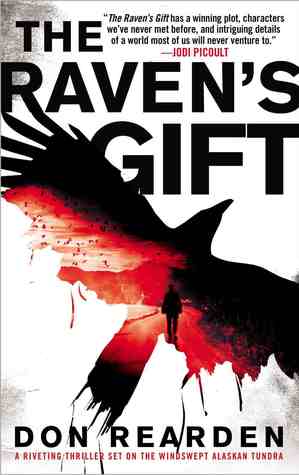
The Raven's Gift by Don Rearden. 288 pages. Published June 2013 by Pintail. (First published in 2011 in Canada).

Confession: I "know" Don through twitter, he is an Anchorage resident and University of Anchorage-Alaska professor. I'd been meaning to read his book for a while, but sped it up after he agreed to participate in an Alaska Book Week event at the library.

John Morgan and his wife Anna know life will be hard as teachers in a primarily Yup'ik village in rural Alaska. That challenge turns to a nightmare when a plague hits and much of the population is wiped out. Faced with trying to hike his way over thousands of miles of tundra, John finds unlikely alliances and horrors waiting among the other survivors.

My husband is Yup'ik and travels to rural Alaska for work and family reasons. He didn't read the book before the author event, but loved hearing Rearden talk and started it the next day. Since then he has been enthusiastically recommending this book to everyone (a few friends, his coworkers) and lending out our copy left and right. He knows far more about rural Alaska than me and says Rearden has it spot-on.

The thing about rural in Alaska is they mean no roads. The only way in is often a boat, snow machine, or usually a small plane. There are no easy fixes or quick resources when trouble happens. It is one of the most isolated environments on Earth. And that alone is scary.

There is a lot of historical groundwork for the devastating consequences of a plague/illness/flu epidemic in remote Alaska. Locals still refer to "The Great Death", a flu epidemic in the early 20th century. It is absolutely one of the most realistic horror books I have read in a long time.

Rearden does an excellent job of portraying the isolation and fear of any survival situation and compounding that with the extremes of the arctic tundra. His narrative switches between three timelines, weaves in traditional Yup'ik stories, and incredibly portrays a place that seems surreal to the modern city dweller. The book was descriptive enough that I felt cold reading it.

And it's creepy. So creepy. I can't tell you about the creepy parts without ruining it for you. But I will say what I expected to be the HORROR was not the scare that I had by the end of the book.

If you want a good survival story, a creepy look at an all too realistic situation, or a really good portrayal of rural Alaska, I urge you to pick up this book.

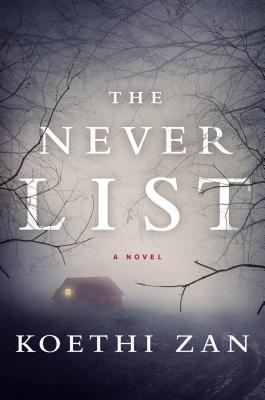
The Never List by Koethi Zan. 303 pages. Published July 2013 by Pamela Dorman Books.

Here we have a "pulled from the headlines" style thriller. After years of keeping a "never list" of actions to be avoided to stay safe, Sarah and Jennifer think they have beaten the odds. But one night they get into a car and wake up in a basement. For the next three years they and other young female captives are sadistically tortured in their basement prison. But it is when they escape and must deal with the consequences of those years and their choices, that contain the true horror.

There are far far far too many of these types of cases in the news. 2010's Room was another novelization of such a horrible case.

Here the story is told in flashbacks between an adult "free" Sarah and the scared college girl in the basement. The horror here lies in not a monster or zombie lurking in the shadows, but within the hearts of man. (And yes I'm humming the old Shadow theme song while I type that cliche).

I don't normally go for thrillers or crime novels, but this one appealed to me because of the psychological aspects of the story. Much of it is about the breaking down, and rebuilding of Sarah's mind. Overall, captivating page turner and fairly well written. There were a few characters I wish I had more development on, but ultimately it was quite a good book.

Escape from Camp 14: One Man's Remarkable Odyssey from North Korea to Freedom in the West by Blaine Harden.

Published March 2012 by Viking. 205 pages. (I listened to an audio version.)

Unlike my other choices for Halloween, this book is non-fiction. Sometimes the scariest things in this world are all too real. Shin Dong-hyuk was the first North Korean to escape from a "total control zone" (prison/work camp) to life in the West. He was born and raised in the prison camp under the Kim policy of punishing the families of offenders to the "third generation". Because his father's brothers had escaped during the Korean war, he and his family were destined to always live in prison. Shin was himself the product of a "reward marriage" arranged by the guards between his parents.

Most of us can not fathom what it is to grow up in an environment without even knowing the meaning of love, to view your mother only as competition for food, your father and brother as virtual strangers.

The view into a closed world offered here is both horrifying and honest. Shin opens up about some of his own actions aware that he might be judged harshly.

One interesting thing I learned, South Koreans are in favor of unification but not right now. Unification with North Korea would be very costly and the extremely robust South Korean economy would bear the brunt of it. Projections show that it would raise taxes for 60 years. (In comparison that is like if we were still paying off my grandfather's fight in WWII when I graduated college.)

If you want a true life horror this Halloween, it doesn't get scarier then life in a North Korean prison camp.

Friday, September 27, 2013

Review - Burial Rites

Lately in Anchorage, it has been gray and rainy. This typical fall weather in Alaska always makes me want to curl up in a chair with a cup of tea and a book that helps me forget the rest of the world. I had an advanced ecopy courtesy of NetGalley that perfectly fit the bill. The weather in the book was also often cold and overcast: perfect match!

Burial Rites by Hannah Kent. Published September 2013 by Little, Brown and Company, 336 pages.

Bottom Line: Highly recommended. A melancholy look at life in early 19th century Iceland and the last person to be executed in that country. Really good at exploring themes of loneliness, relationships, redemption, and society. Fascinating glimpse into Icelandic society. Should be picked up by most public libraries. Will appeal to historical fiction fans and literary fiction readers.

In 1829 in Iceland, two men have died horrible deaths and three people are tried for the crime. Two are sentenced to death and one to life in prison. While they await confirmation of the sentence from the ruling Danish officials, Agnes is moved to a farm in the valley where she grew up to be held prisoner in the home of a minor government official.

Of course the official and his family have no prison on their land, so Agnes lives with the family as a servant, gradually revealing her own story and becoming part of that family's story.

Utterly fascinating. I didn't know much about life in Iceland and I loved this peek at how it worked. For example I didn't know that Iceland was ruled over by the Denmark (and the Danish King) from the 13th century until the end of WWII. All the little details about life in such a harsh Northern climate, on farms where people were barely surviving were beautifully woven into the story. At no point did you feel like you were receiving a history and sociology lesson, but rather that you were seeing into their society. (It should be noted that the author is an Australian who has spent considerable time in Iceland.)

The setting is dramatically described as both culturally and physically harsh. Flashes of Agnes' life are revealed as we see how hard it was to be an unwanted child, a servant, in a time where survival was not guaranteed even for the wanted children of well off farmers.

Writing is lyric and melancholy. Haunting and mesmerizing are adjectives used to describe books so often as to become meaningless cliches, but they apply.

What I loved about this book that I didn't realize how much I enjoyed it until after a few weeks of deliberation was the lack of didactic moralizing. This isn't a story against the death penalty. It is just a story, just a thing that happened. Steinbeck did the same type of storytelling with Of Mice and Men. These are the tales of how people live, how horrible things can happen without horrible intentions, how life can be hard, survival a challenge and beauty still exist.

As a funny note, I read this as an ebook advanced copy from NetGalley. The library's copy arrived on Wednesday. On Thursday a high schooler arrived with an assignment to read any book more than 250 pages not by an American author. I book talked this one to her and she left with it very happily. Fortuitous timing.

Saturday, September 07, 2013

Review - The Returned

Please don't let the fact that this is published by Harlequin dissuade you. There's nary a heaving breast or throbbing member to be found. Instead you have some very well written speculative fiction.

The Returned by Jason Mott. Published by Harlequin, August 27th, 2013. 352 pages.

Bottom Line: Not a flawless book, but a very good book. Focusing more on human nature and relationships than supernatural, it is a nonetheless eerie book that succeeds in getting under the skin of the reader. Recommended for purchase by most librarians. Will appeal to fans of China Mieville and Carlos Ruiz Zafon.

All around the world, the dead are returning. They're not coming back as zombies or ghosts or vampires (not that type of novel), they're just coming back. Thousands of miles from home, with no memories of the afterlife, just returning in much the same condition they were when they died. This presents problems when, for example, a group of Nazi soldiers comes back in a small town in rural America. At first the Bureau tries to reunite the returned with their families, but not every returned is welcomed back. They bring out a lot of complicated feelings. And the problems grow as the numbers of returned grow.

At the heart of the novel is the small town where the Hargraves live. They face complicated feelings when their young son, drowned nearly 50 years earlier, is returned. And then their town is taken over for a detention center for the returned. As tensions burn between the returned, the soldiers, and the "True Living" townsfolk, no one is ready for the chaos.

The concept is fascinating. The dead returning as almost but not quite living with no explanation. The reader receives no more explanation than did the people of the novel allowing us to share in the mystery and frustration.

The setting is incredible. You see this small town, a bit run down by the economy, filled with people who aren't good or bad but just people, and you feel like you could live there. Or that you do. Because it is every small town, but it is also its own place.

Characterization was fantastic. Even the "villains" are fully developed complex characters. No one was predictable. Some of the characters I thought I knew the best managed to surprise me right at the end, but surprise me in a way that was consistent with their character and shed light on every previous action. In other words, some of the best characterizations I have ever felt.

Great premise. Fantastic setting. Incredible characterization. Mediocre plot. The plot pacing was uneven. And that kept everything from entirely gelling together. This book was very good, but just short of great.

Between the chapters about the main characters, there are interludes written from the point of view of a returned. These are some of the most beautiful and haunting, little glimpses into the confusion. They were some of my favorite parts of this novel. I think I would really have enjoyed seeing this novel as a series of short stories set in the world dealing with this returning of the dead.

But I can't wish for a book that doesn't exist. And I did really enjoy this book. I do recommend it. It's speculative fiction without being hardcore, returning from the dead without being zombies, paranormal but not frightening, it does what great literature does, it makes us look within ourselves to ask how we and our neighbors would handle a situation.

Tuesday, September 03, 2013

Change is Hard

One of my new goals is to read at least one book that might help me be a better librarian or manager a month. They don't all have to be actually aimed at librarians, but I will be reviewing them under the tag "professional lit". To that end my first book was about change. It was the August book, but I am a bit delayed on the blogging.

Switch: How to Change Things When Change is Hard by Chip Heath and Dan Heath. Published in 2010 by Crown Business. 320 pages.

Change is ever present in our personal and work lives. A lot is being written about how libraries are facing a crisis/ebook revolution/time of change. And yeah. But that was also true when we went to computers and integrated library systems (ILS for the acronym geeks out there). It was true when we dumped the card catalog and went to OPACs (online public access catalogs). It was true when we racially integrated libraries. Back in the 16th century there was probably a librarian grousing that switching to the Gregorian calendar would really mess up the acquisition records.

Okay a lot of those things happened before my time in librarianship. But my point is that we have always been a profession who faced change.

My library system has been going through a lot of change. As a middle manager, I've been responsible for helping to implement some of that change, but I have not always been in on the meetings or decisions to make that change. And of course my personal life has had a lot of change lately, some good some not so good. Thus change and change management are of special interest to me.

Bottom Line: This book is really good. You should read it if you are interested in change or management. It has a good basic framework that is supported with practical examples from business, social work, non profits, and personal life. It avoids the trap of speaking too much in scholarly jargon and produces an approachable book that doesn't feel dumbed down.

Basic framework: To make change happen, balance the rational and emotional parts of people's minds. Give motivation to their emotional part of the brain and clear direction to their rational part.

I'm not going to quote the entire book verbatim, but here are a few relevant examples.

Clear direction to the rational part of the mind. For example we could say "be more friendly and welcoming to the patrons". That's really vague. Most staff think they are friendly and welcoming, regardless of how they are perceived. A few years ago we heard a good framework at a customer service training. It's the 10-4 rule. When a patron is within 10 feet of you, make eye contact and smile. Acknowledge them non-verbally. The patron feels welcomed and is more likely to approach you if they need help. When a patron is within 4 feet of you, verbally greet them. Super easy and works like a charm. This very clear directive makes a world of difference in customer service.

Another great piece of advice. Shrink the change. Don't make people change the world all at once, give them small achievable steps.

Give people a head start. The example in the book was of a car wash that gave some customers a loyalty 8 punch card (and then the 9th was free) and other customers a 10 punch card to earn a free wash. The customers with the 10 punch card were told they were given two free punches for loyalty. So both groups had to earn 8 punches for the free wash. The customers who thought they had a two punch head start were more likely to complete their punch card.

We did something very similar with summer reading this system. When our youth services librarians visited schools, they gave out a large bookmark style summer reading promo that also had the first few lines of the summer reading chart so kids could start tracking the time they were reading. They were really excited to get a "head start" on their reading and were already invested in the program and (hopefully) more likely to come in and sign up.

Last crumb from the book: tweak the environment. To make change work, to make it easier and more likely to stick, change the environment in favor of the change. Years ago I worked at a library that wanted more people to use self check machines (staff cuts, staff reduced by attrition, more effective). Rather than just putting up a self check and hoping for the best, they totally redid the circulation desk. Instead of 3 clerk stations and one self check, you had to walk past four self checks to get to the only clerk station. That, and friendly staff members offering to help them use the self check, really helped people convert to self checks.

My favorite comment of that system, when someone worried that seniors wouldn't be able to deal with the new machines, was from my branch manager. He replied that those same seniors had been using ATMs happily for 20 years. And it really wasn't a problem.

In summary: this is a great book for librarians and managers and I highly recommend it. It has given me a lot to think about in terms of change in our system and in my own life personally.